
Last updated September 20, 2026
Full 25-point door and opener safety check with every visit - springs, cables, rollers, tracks, and your LiftMaster or Chamberlain opener included
You get a price before we start. It does not change when the truck arrives.
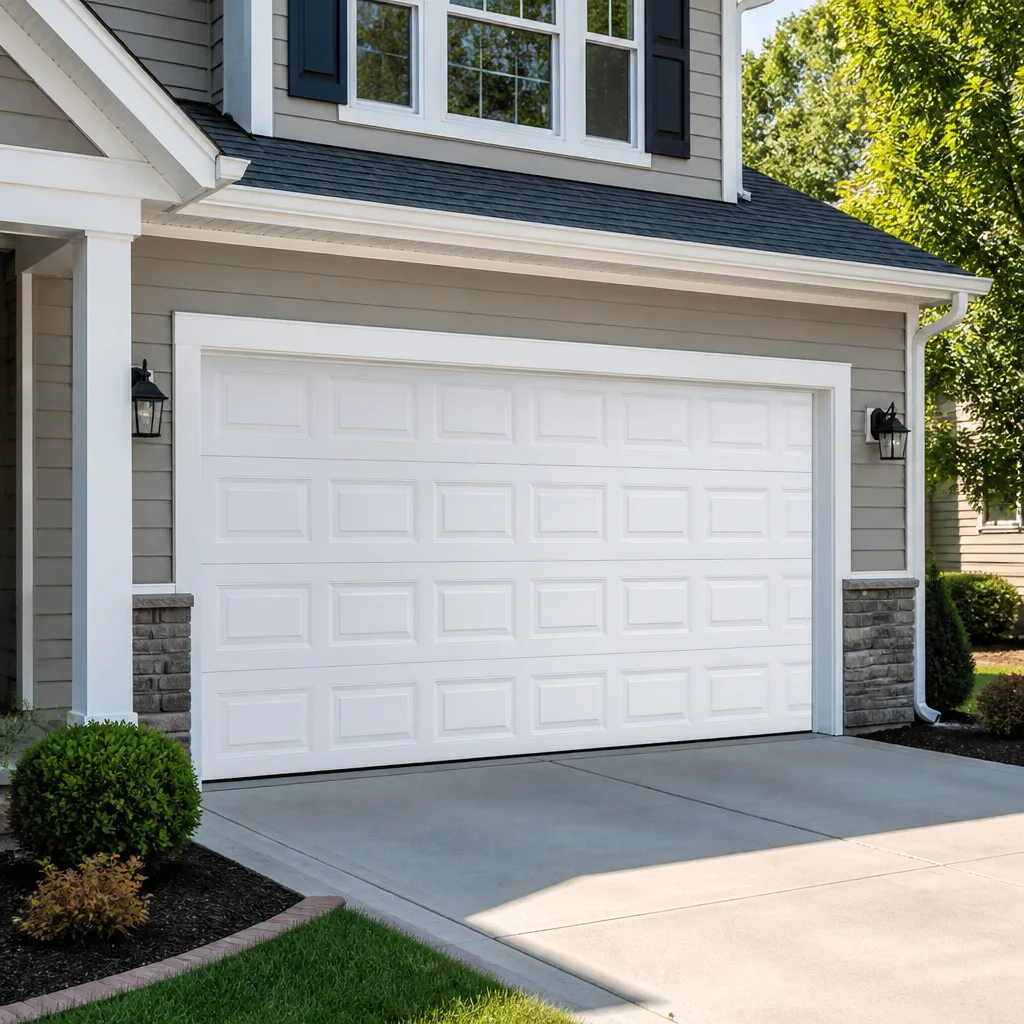
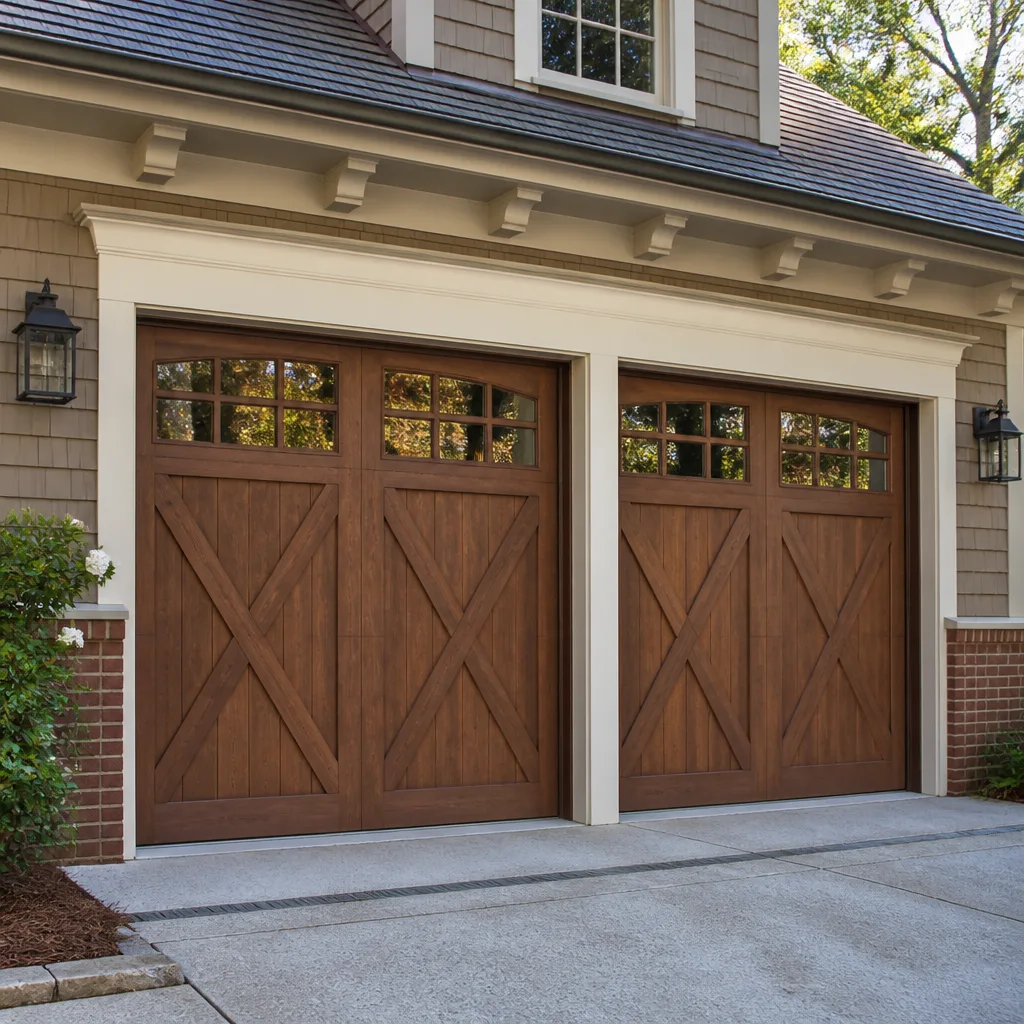
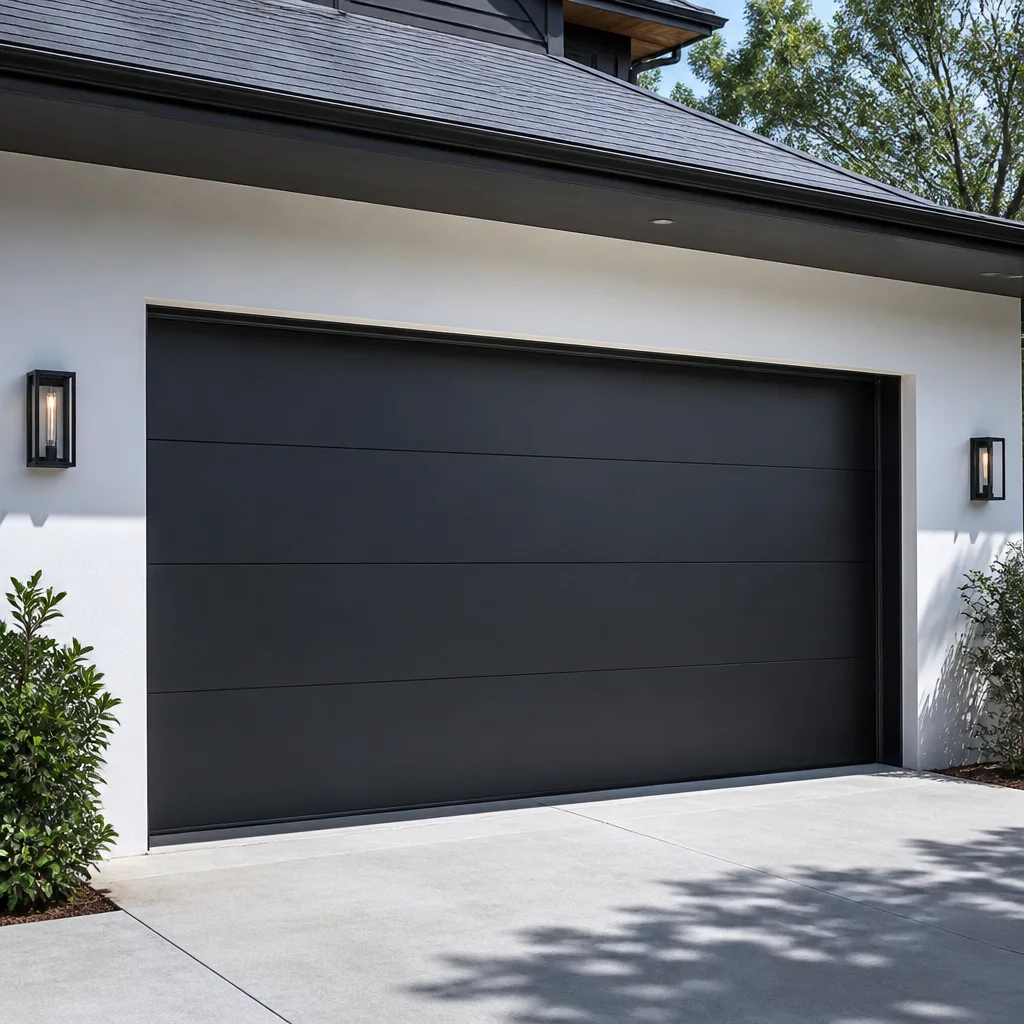
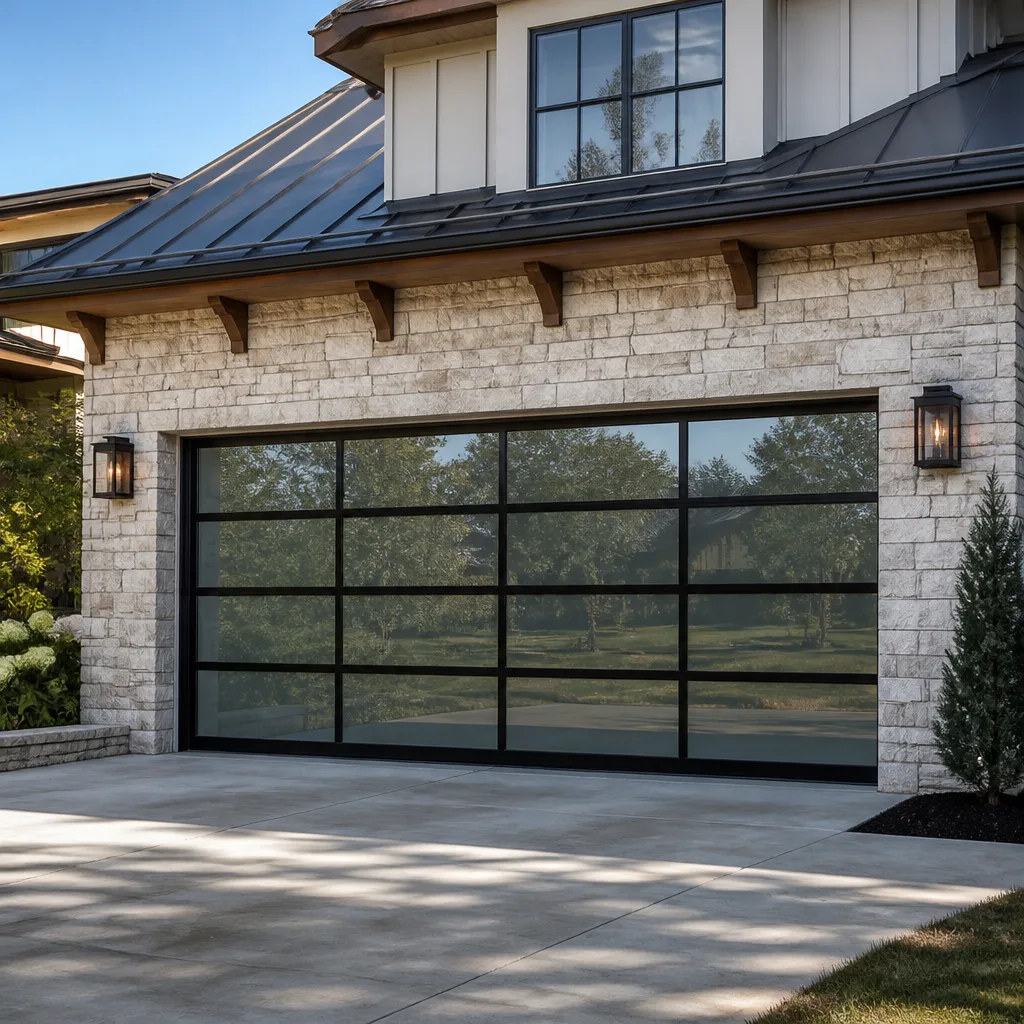
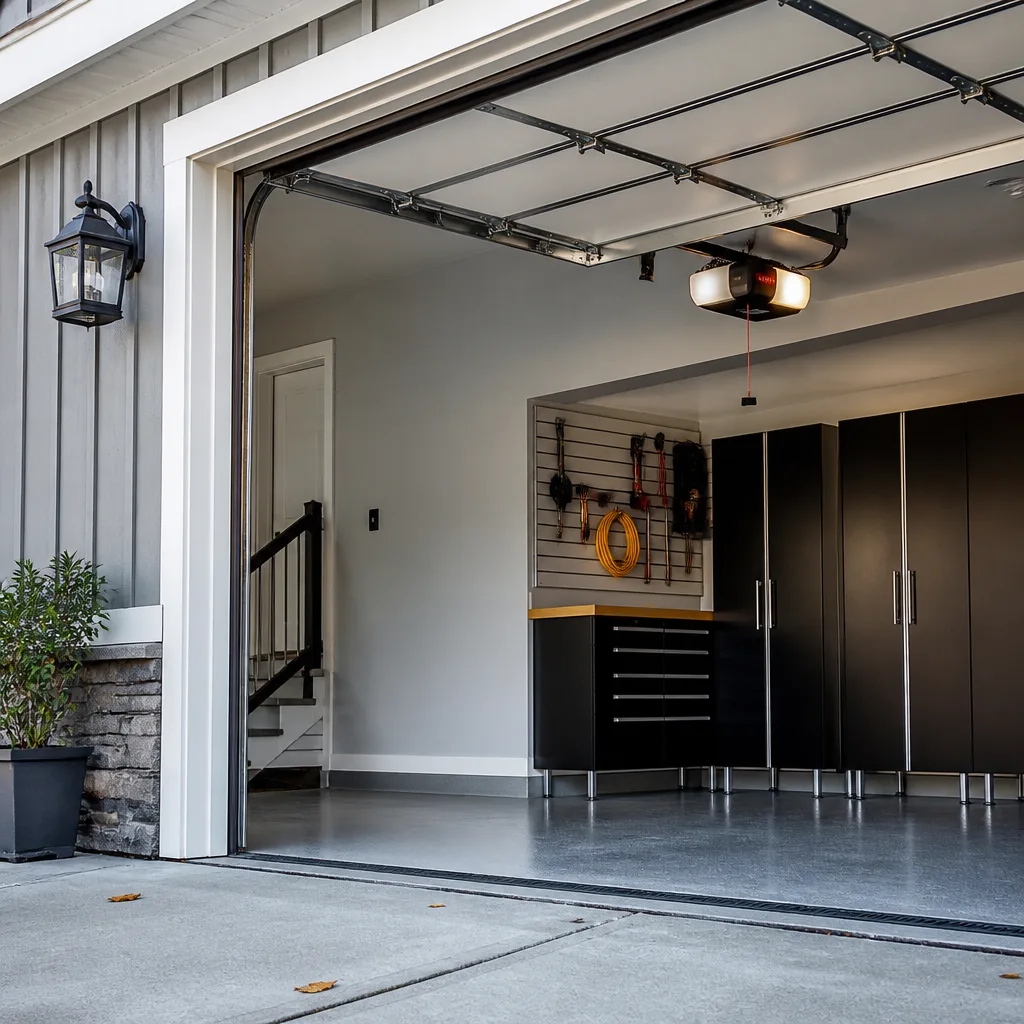
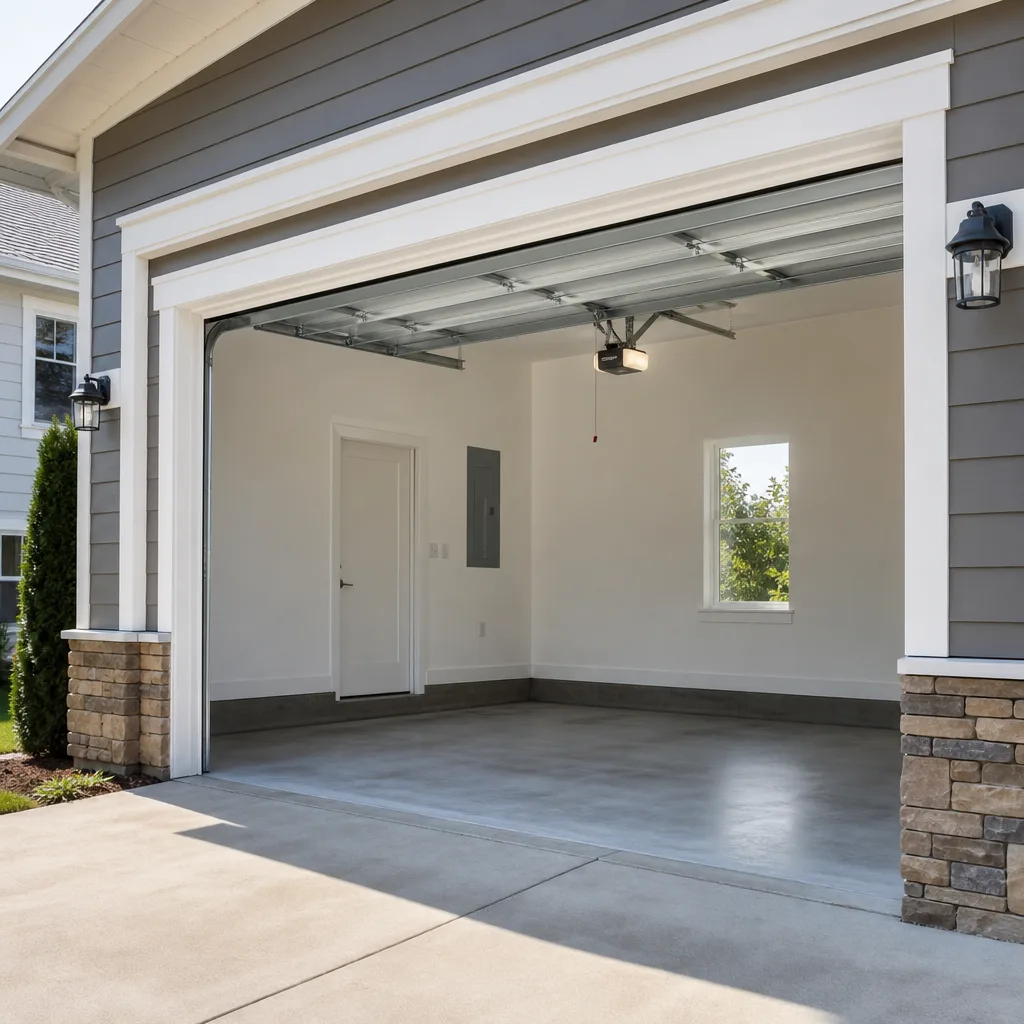
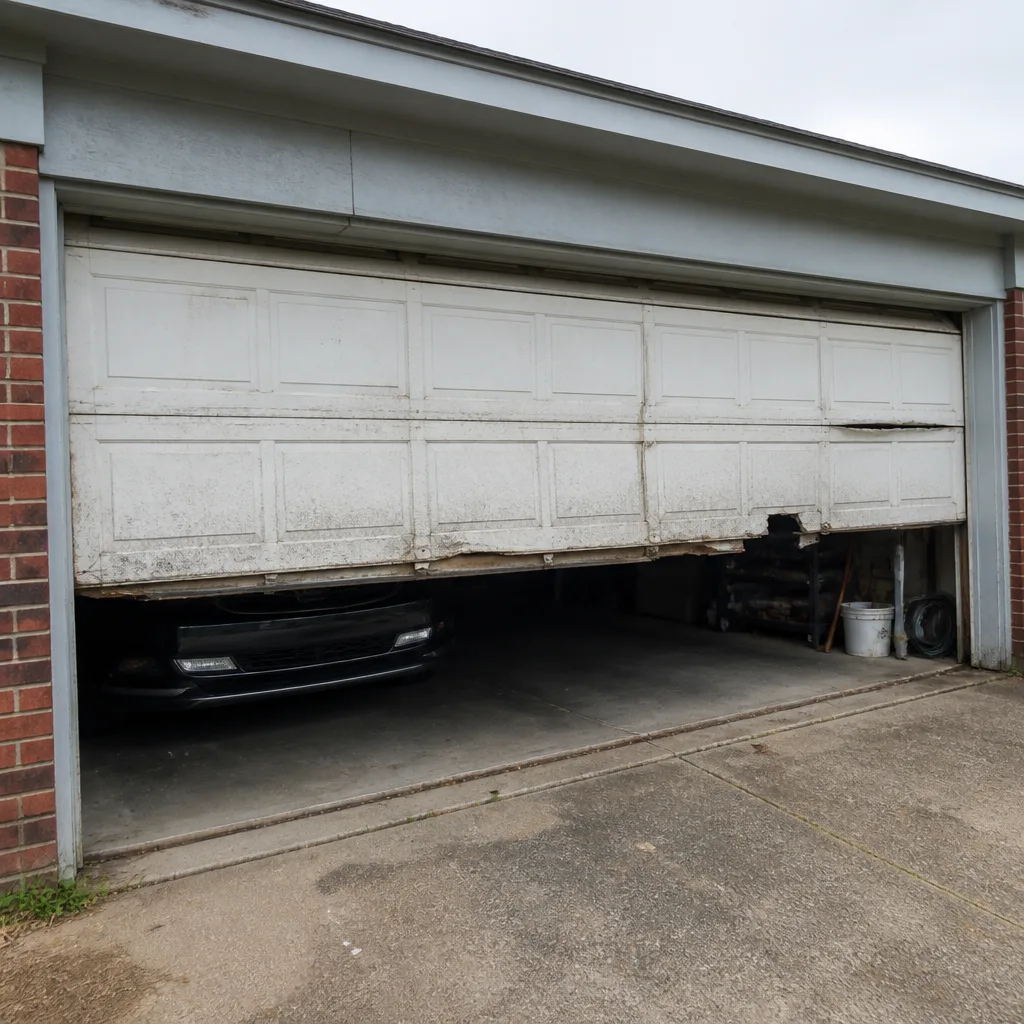 Before
 After
After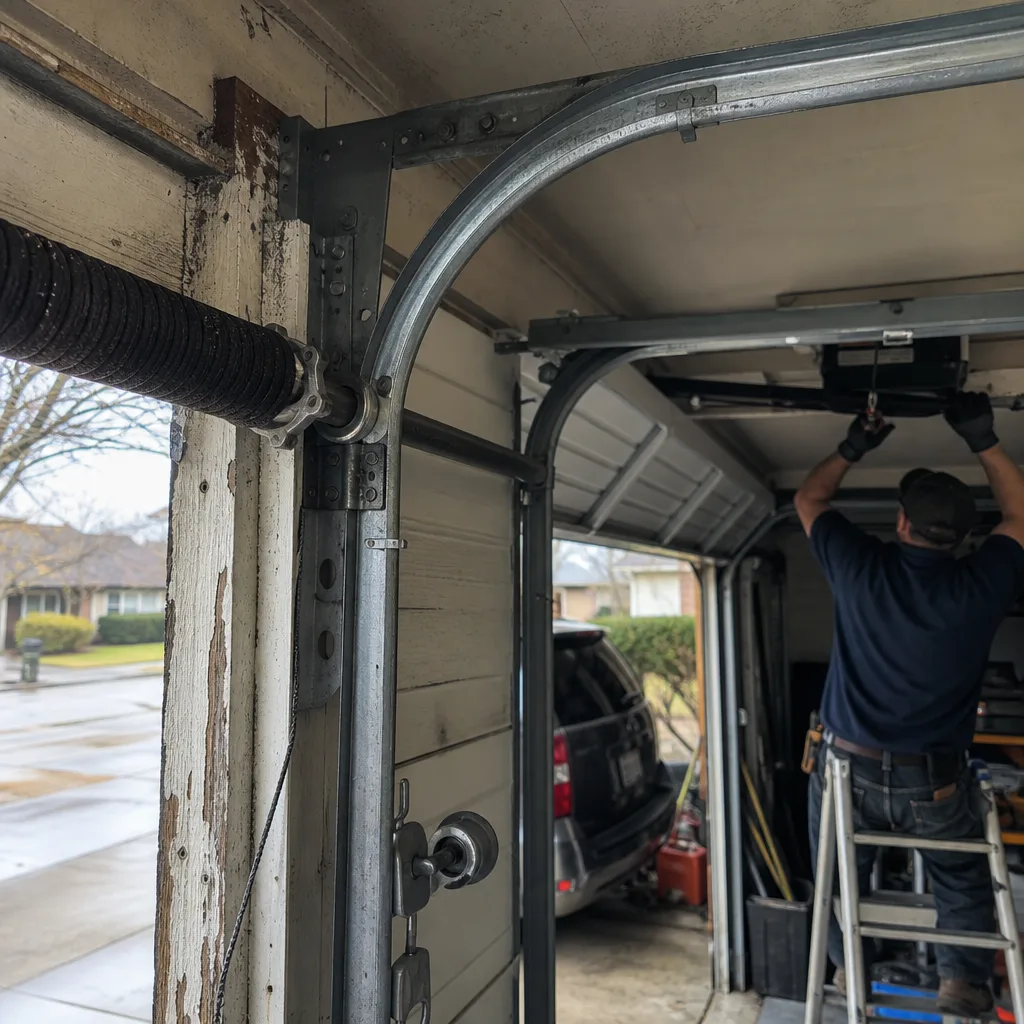 Before
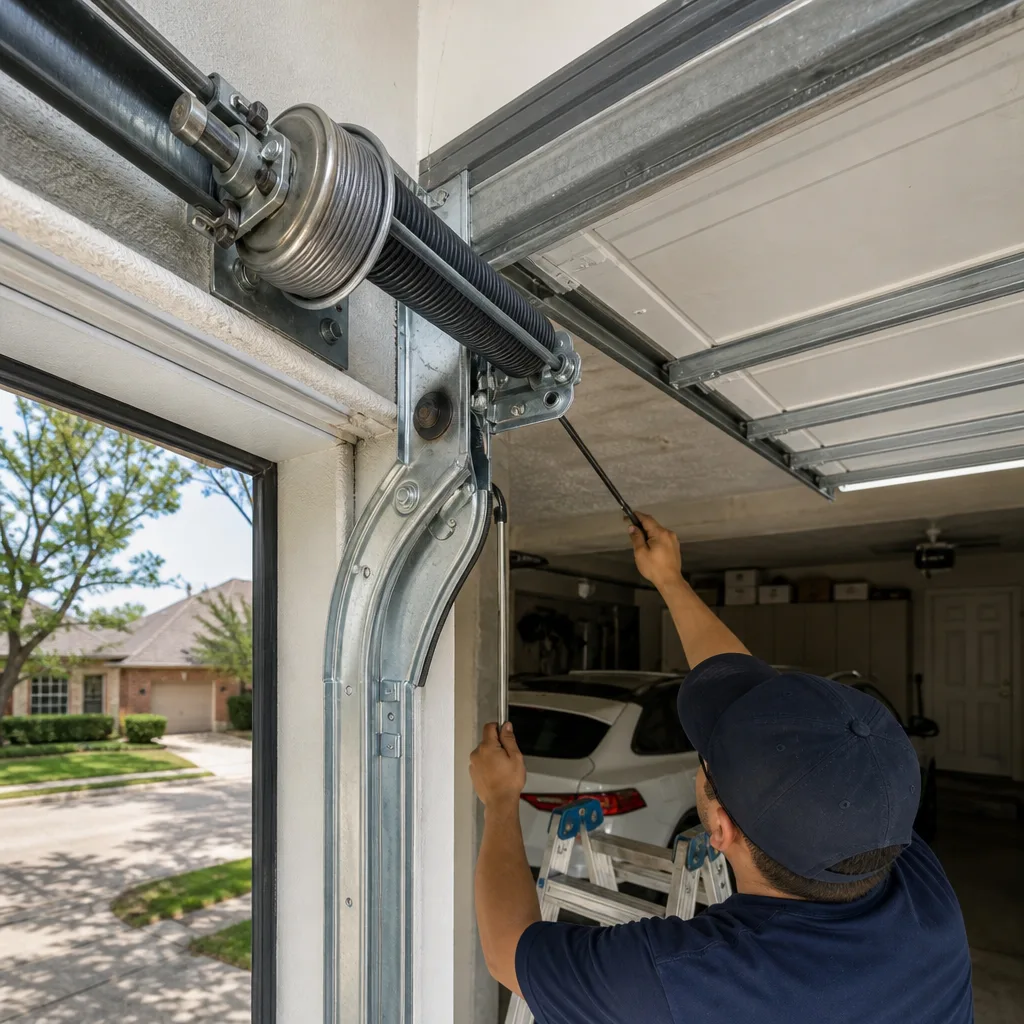 After
After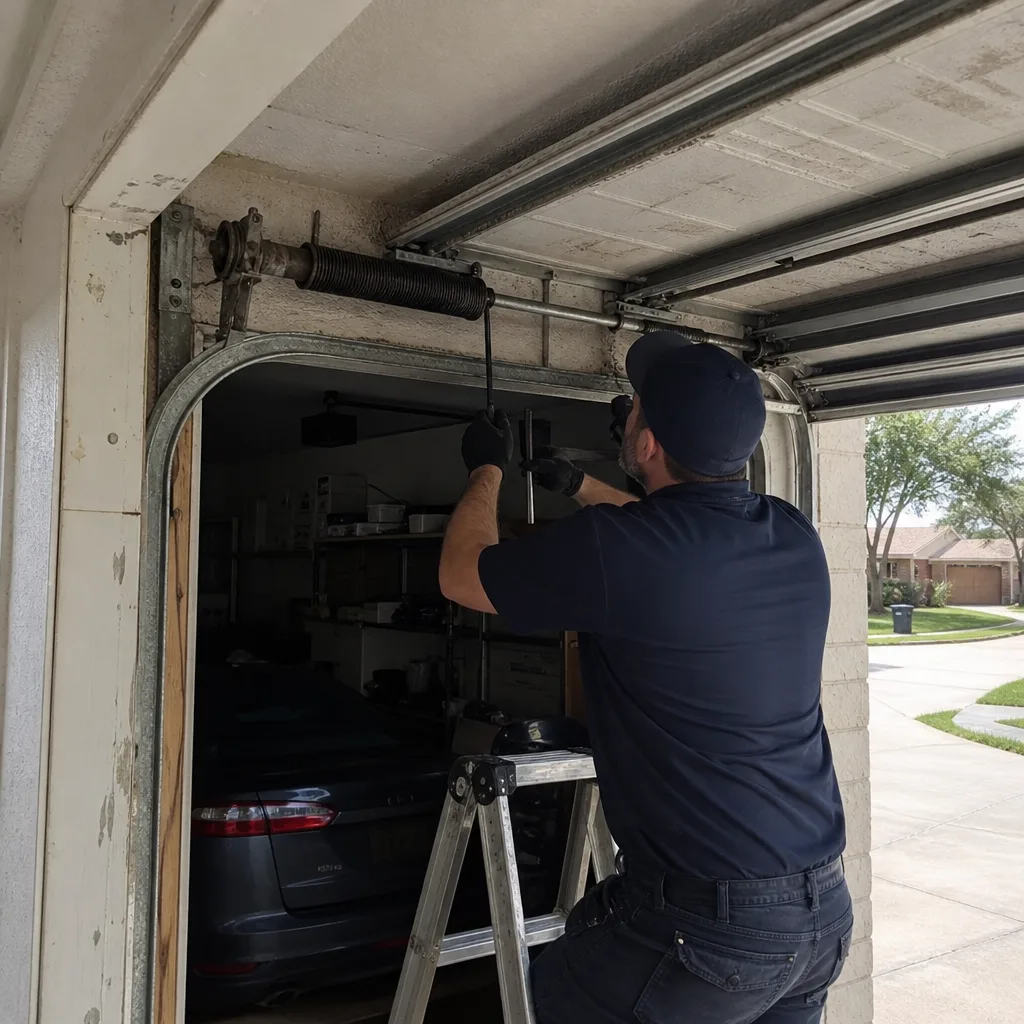 Before
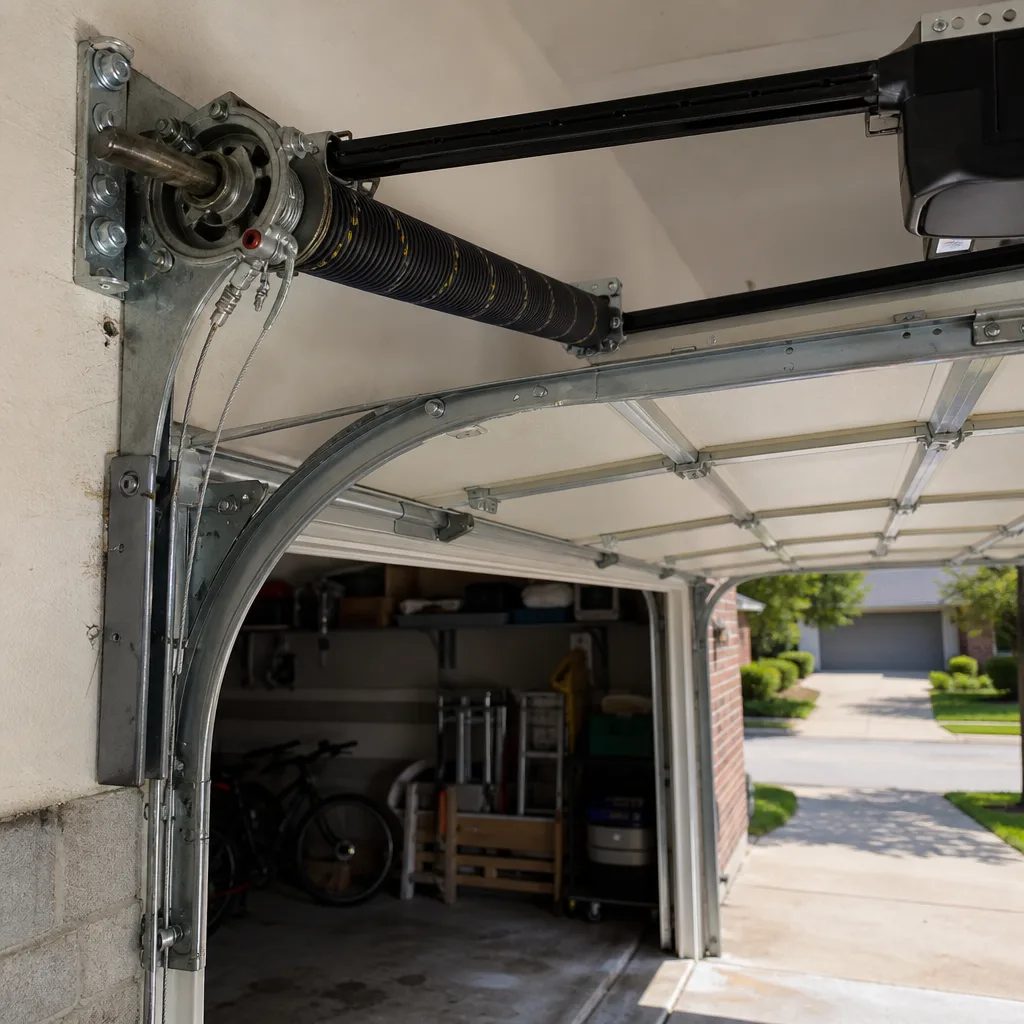 After
AfterGarage Door Warning Signs: A Plano Homeowner’s Reference Guide
Here’s a number most Plano homeowners never hear: a standard torsion spring is rated for roughly 10,000 open-close cycles. That’s about seven years of normal use in a two-car household. When it fails, it doesn’t fail gradually in a way you’d notice without looking. It breaks, usually between 2 a.m. and 6 a.m. when the garage is cold and the metal is most brittle. This guide exists because the difference between a $400 scheduled repair and a $1,800 emergency replacement in Plano often comes down to whether someone knew what to look for six weeks earlier. We’ll name the components, describe the sounds, and give you the honest repair-or-wait call on each sign. If you’d rather skip straight to the two signs that cannot wait, scroll to Section 4.
Quick Answer
The two garage door warning signs that require same-day attention in Plano are a visibly broken torsion spring (the door should not be operated) and a frayed cable at the drum (one strand failure away from a door drop). Every other warning sign, from grinding rollers to a slow-reversing door, can be scheduled within days or weeks depending on severity. Noise, uneven movement, and slow reversal each point to a specific component with a predictable repair timeline and price range, all covered below.
Table of Contents
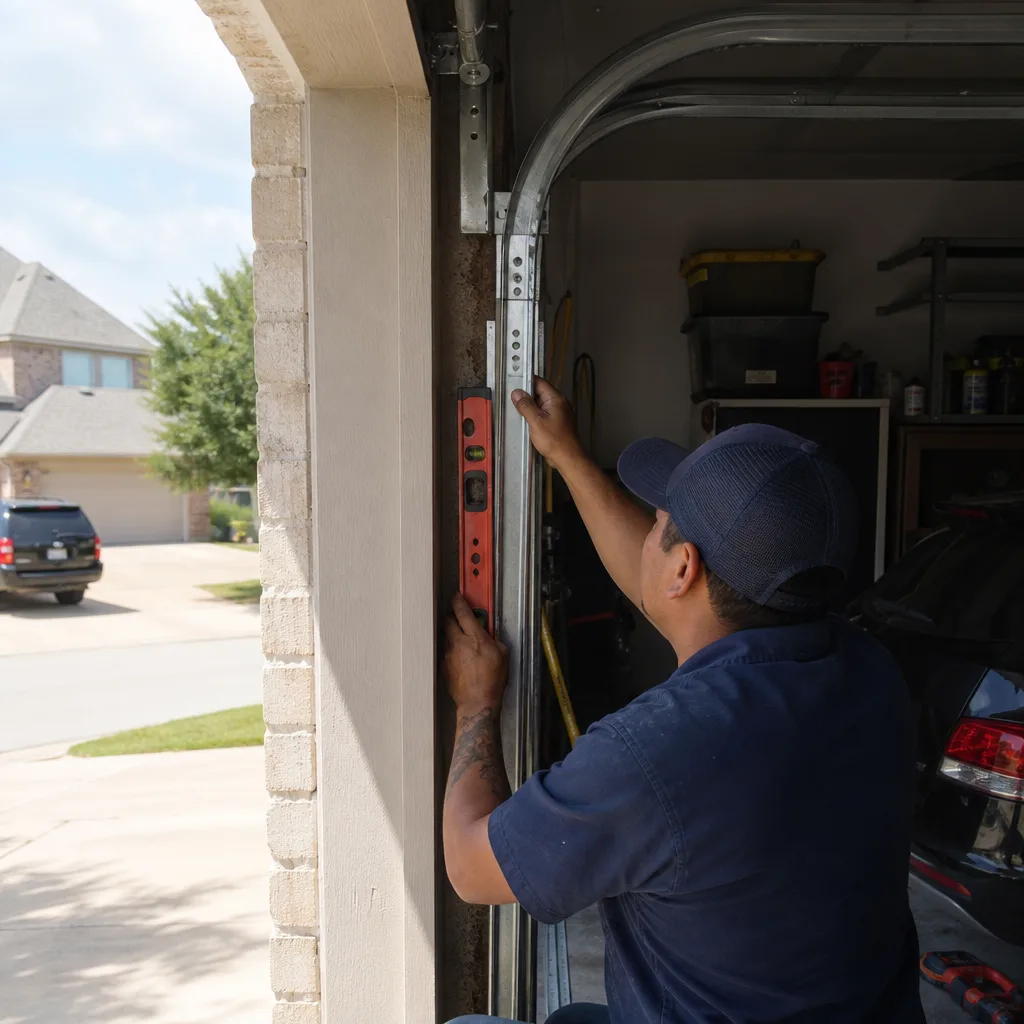
- The Two Genuine Emergencies: Broken Springs and Frayed Cables
- Noise Diagnosis: What Grinding, Scraping, and Popping Actually Mean
- The Slow-Reversal Sign: Three Causes in Order of Likelihood
- Visual Wear Indicators: Measuring Cable and Roller Deterioration
- The Asymmetry Test: The Most Informative 30-Second Check You Can Do
- Opener Warning Signs: When the Logic Board Speaks
- Plano-Specific Factors: Heat, Clay Soil, and Code Requirements
- Cost and Repair-or-Wait Recommendations by Sign
BeforeAfterThe Two Genuine Emergencies: Broken Springs and Frayed Cables
There are exactly two garage door warning signs in Plano that justify calling a technician immediately, and we mean the same day. Everything else in this guide can be scheduled. Understanding why these two are different requires naming the component and what happens when it fails under load.
Sign 1: A Broken Torsion Spring
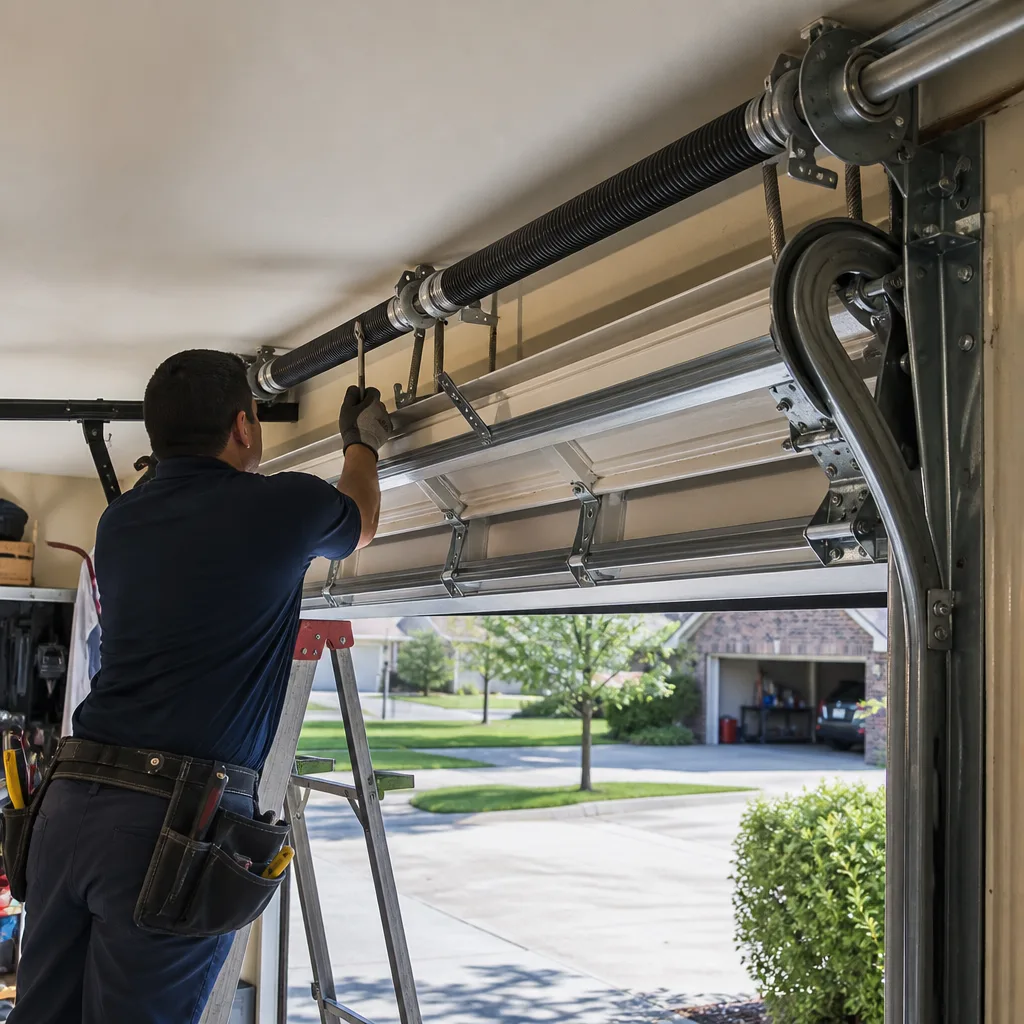
The torsion spring is the coiled steel shaft mounted horizontally above your garage door opening. It stores the mechanical energy that lifts the door’s weight, typically 150 to 200 pounds for a double door. When it breaks, it breaks cleanly, usually at the coil, and you will often hear it from inside the house as a loud pop or bang that sounds like a car backfiring in the driveway. Walk to the garage and look up at the spring. If you see a two-inch gap in the coil where the metal has separated, the spring is broken. Do not operate the door. Do not test it. The spring under tension is the single most dangerous component in a residential garage system, and a door with one broken spring on a two-spring system is now carrying uneven load on the remaining spring, which shortens its remaining life by weeks or months.
We photograph broken springs on every visit before quoting replacement. That’s Clause 4 of The Haven Standard, the documentation system our Plano shop has operated under since 2015. The customer sees the break, the measurement, and the price before any work begins. No “you’ll need to trust us on this.” You’ll see it.
Repair timeline in Plano: same day. We stock torsion springs for all major residential door weights, including LiftMaster and Chamberlain systems, in our Plano service vehicles. A spring replacement is roughly a one-hour job. If you’re looking for a detailed breakdown of what’s involved, our Garage Door Repair in Plano page covers spring replacement scope and pricing structure.
Sign 2: A Frayed Cable at the Drum
The lift cables are the steel wires that run from the bottom brackets of your door up to the cable drums on each side of the torsion shaft. They carry the door’s weight when the spring does its job. A cable starts as seven strands wound together. Fraying happens when individual strands begin to separate, usually at the drum or at the bottom bracket where the cable bends under load. If you see three or more broken strands at the drum, the cable is one strand failure away from snapping. When a cable snaps, the door drops suddenly on that side, twisting the track, bending the bottom panel, and throwing the other cable off its drum. The repair bill triples because now you’re replacing track, cables, and often the bottom section.
This is a visual inspection you can do from the ground with a flashlight. Look at where the cable wraps onto the drum. If it looks like a rope unraveling at the end rather than a tight spiral, call us. If you cannot see the drum clearly because the door is closed, do not open it. Call and describe what you see. We’ll schedule the same day. For those in Plano who need replacement rather than repair, our Garage Door Installation in Plano page walks through what a door replacement involves and what it costs, written out before any work starts.
Safety note: Lift cables are under spring tension. Do not attempt to re-wrap or tighten a cable yourself. The stored energy in a torsion system can release a cable with enough force to cut through leather work gloves. This is one area where calling a Plano garage door technician is not a convenience, it’s a requirement.
Noise Diagnosis: What Grinding, Scraping, and Popping Actually Mean
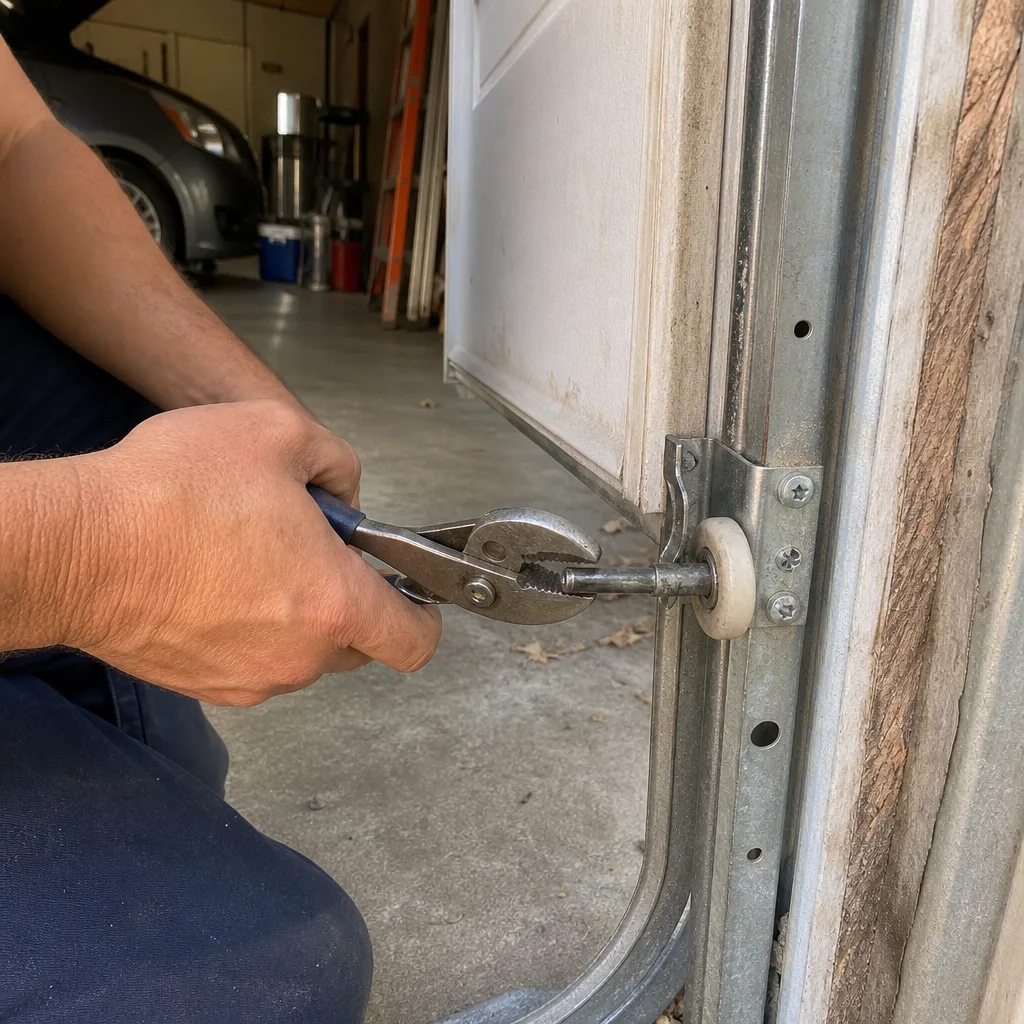
“Grinding noise” is not a warning sign. It’s a symptom, and without identifying the component producing it, the phrase has no diagnostic value. Here’s how to match each sound to its mechanical source.
Grinding: Metal-on-Metal Contact, No Lubrication
A grinding sound, especially present during the full open and close cycle, almost always points to rollers running dry inside metal track. Genie and Raynor doors built before 2010 typically use nylon-bushed steel rollers that seize when their internal bearings dry out. The roller stops rolling and starts sliding, grinding against the track. This is a lubrication issue first, a replacement issue second. Repair or wait: lubricate the rollers and hinges with a silicone-based garage door lubricant this weekend. If the sound persists after lubrication, the bearings are seized and the rollers need replacement. Roller replacement on a double door in Plano runs $120 to $180, done in under an hour.
Scraping: A Singular, Rhythmic Rub
Scraping differs from grinding in rhythm. A scrape happens once per panel as it passes a specific point in the track. It usually means a track has come out of alignment, a bolt has loosened, or a panel has warped slightly from Plano summer heat. Walk the track with a flashlight while the door is closed and look for bright metal wear marks. The wear mark tells you exactly where the panel is rubbing. Repair or wait: track alignment is a scheduled repair, not an emergency. A minor alignment correction is often under $100. But don’t let it go six months; the rubbing panel will eventually crack at the stile.
Popping: The Hinge and Roller Problem
Popping or banging during operation usually comes from the hinges that connect door panels, particularly the center hinges that carry the most flex. On Craftsman and Chamberlain door systems we service across Plano, the most common culprit is a hinge that has worked loose from repeated thermal expansion. The metal door panels expand in Texas summer heat and contract in winter cold, slowly loosening hinge bolts over years. A pop is the hinge shifting under load. Repair or wait: tighten the hinge bolts (9/16-inch socket on most residential doors). If a bolt spins without tightening, the threaded hole is stripped and the hinge needs replacement or a rivet repair. That’s a scheduled fix, not same-day.
The Slow-Reversal Sign: Three Causes in Order of Likelihood
When your door reverses before reaching the floor and travels back up, homeowners in Plano call it a “sensor problem.” It’s usually not. Here are the three causes in order of what we actually see in the field, starting with the one responsible for roughly 70% of slow-reversal calls.
Cause 1: Sensor Misalignment (Most Common)
The photo eyes mounted six inches off the floor on each side of the door track send an infrared beam between them. When the beam is interrupted, the door refuses to close. In Plano garages, where temperature swings cause the thin metal brackets holding sensors to flex and shift, misalignment happens constantly. A sensor nudged by a trash can, a basketball, or even the vibration of the door itself will drift out of alignment over months. The edge of the beam catches the edge of the receiver lens, and the door reverses. How to tell without a technician: look at both sensor lights. One sensor shows a solid green light, one shows solid amber or red. If either light is blinking or dark, the beam is misaligned or blocked. Bend the bracket back by hand until both lights are solid. Test the door again.
Cause 2: Limit Switch Drift (Second Most Common)
Your opener’s limit switch tells the motor where the “closed” position is. On LiftMaster and Chamberlain openers, this is set digitally during installation. On older models, it’s a physical screw or dial on the motor unit. Over years of daily cycles, the limit setting drifts. The opener thinks the floor is two inches lower than it actually is. The door touches the concrete, detects unusual resistance, and reverses as a safety response. How to tell without a technician: watch the door as it closes. If it presses into the floor, compresses slightly, and then reverses, the limit is set too low. On digital LiftMaster units, consult your manual to adjust the down-force limit upward by one increment. On older physical-dial units, turn the “down” limit a quarter turn at a time. This is a five-minute adjustment.
Cause 3: Obstruction or Track Binding (Least Common)
If both sensors show solid lights and the limit setting hasn’t changed, look for an obstruction. Plano garages accumulate yard tools, bicycles, and storage bins around the door track. Something touching the track will cause the door to bind and reverse. Check both vertical tracks, top to bottom. Also check where the curved section of track meets the horizontal: this is where a small impact from a car bumper or a fallen rake handle causes pinching. How to tell without a technician: if the door reverses at the same point every time, that point is the obstruction. If it reverses at different points, it’s a sensor or limit issue.
If you’ve checked all three and the door still reverses, the issue is likely in the opener’s logic board. Our Garage Door Opener Repair & Installation in Plano page covers logic board diagnosis and replacement, including written pricing before any board is replaced.
Visual Wear Indicators: Measuring Cable and Roller Deterioration
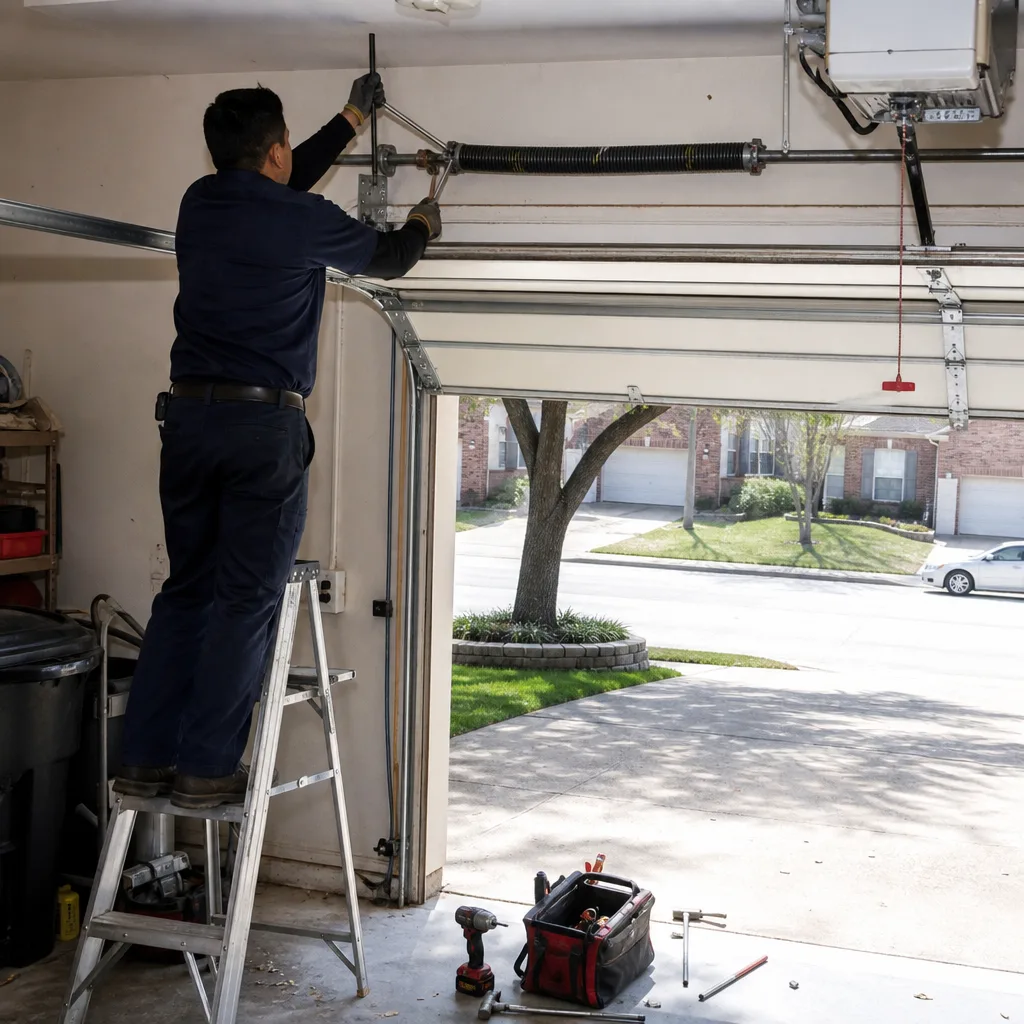
You can measure wear on your garage door the way a technician does: with a flashlight, a ruler, and a minute of your time. Here are the thresholds we use on every inspection in Plano.
Cable Fraying: The Strand Count Standard
Lift cables are 7-strand steel wire. Acceptable wear is zero broken strands. One or two broken strands at the drum means replacement should be scheduled within 30 days. Three or more broken strands means same-week replacement. What you’re looking for is not just a fuzzy appearance; some cable fuzz is normal with age. You’re looking for individual strands that have separated from the bundle and stick out visibly. Count them. If you’re not sure whether what you’re seeing is a broken strand, send a photo; our Plano office looks at customer photos every day and we’ll tell you honestly whether it needs a visit.
Roller Wear: The Wobble Test
Rollers wear in two ways. The bearing inside the roller wears, causing the wheel to wobble as it spins. The outer nylon or steel surface wears, causing the diameter to shrink and the roller to rattle in the track. To check bearing wear: close the door and grasp a roller stem with your fingers. Try to wiggle the wheel side to side. Movement of more than about 1/8 inch indicates bearing wear. To check surface wear: look at the roller where it contacts the track. A smooth, glossy contact patch with visible flat spots means the roller is worn past its service life. On double doors in Plano, roller replacement typically runs $120 to $180 for all rollers, parts included. It’s a scheduled repair, not an emergency.
Spring Wear: The Gap Measurement
Torsion springs wear predictably. A spring that has been in service for more than seven years may show signs of “stretch,” where the coils separate slightly at the center. Using a ruler, measure the gap between coils at the center of the spring. A gap wider than 1/8 inch between coils at rest indicates the spring has lost tension and should be replaced within 60 days, even if it hasn’t broken. This is the kind of measurement our technicians document in photos on every visit, part of the documented photo record that comes with every Servo job in Plano. You see the measurement, you see the coil separation, and you see the price before we start. That’s the system.
The Asymmetry Test: The Most Informative 30-Second Check You Can Do
Stand inside your garage, centered, about ten feet back from the door. Press the opener button and watch the door during a full open-close cycle without moving your head. Here’s what you’re looking for and what each observation tells you.
- Watch the top corners during travel. Both corners should rise and fall at exactly the same rate. If the left corner lags the right by even a half inch, one spring is doing more work than the other. On two-spring systems, this means one spring has lost tension or the cable on one side has stretched. On single-spring systems, it means the spring is near the end of its service life.
- Watch the bottom of the door at the halfway point. When the door is exactly halfway through its travel, the bottom section should be perfectly horizontal. If it tilts more than a half inch, the system is pulling harder on one side. This is typically a cable issue at the drum.
- Watch for hesitation. The door should move continuously. A pause or “catch” at the same point in every cycle usually indicates a track alignment problem or a roller binding. A one-time hesitation is often just temperature; repeated hesitation is mechanical.
Why this test matters more than any other: it catches tension imbalance before it catches you. An unbalanced door forces the opener motor to work harder, shortens spring life, and accelerates track wear. The asymmetry test costs nothing and takes 30 seconds. Run it once a quarter. In Plano, where our garages go from 35 degrees in January to 105 degrees in August, seasonal temperature swings shift metal components; the asymmetry test catches those shifts early.
Opener Warning Signs: When the Logic Board Speaks
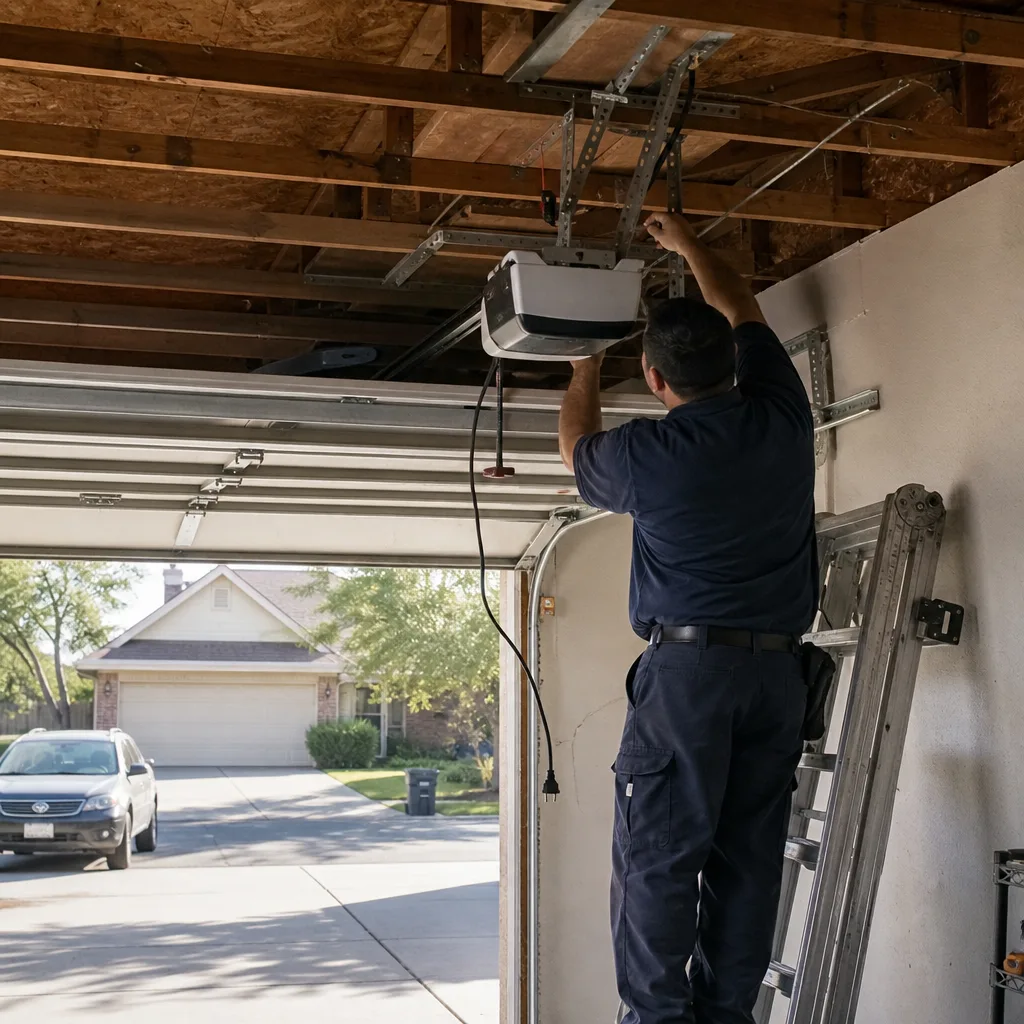
Garage door openers in Plano fail in predictable ways, and the most reliable early warning comes from the logic board. Here’s what to listen for.
The Click-No-Start
You press the remote or wall button. You hear a click from the motor unit. The door doesn’t move. On LiftMaster and Chamberlain openers, this is often the logic board relay failing to send power to the motor. A replacement logic board is usually $140 to $220, installed. It’s a scheduled repair. If you’re seeing this intermittently, don’t wait for it to fail completely; intermittent relay failure will strand you outside on the one morning you’re running late.
The Grinding Motor
An opener motor that grinds or whines while the door moves slowly is drawing excess current, usually because the door itself has become heavy from spring wear. The motor is working harder because the spring isn’t counterbalancing the door weight. Replacing the spring usually resolves the motor noise. Replacing the motor without checking spring balance is a $400 mistake.
The Short-Cycle
A door that starts to open and then stops after a few inches, or starts to close and immediately reverses, with no obstruction present, often points to the limit system or the RPM sensor, not the motor. Modern openers track door position by counting motor revolutions. A failing sensor gives the logic board bad data. This is a diagnostic job, and the photo record we provide on every visit shows the reading before and after repair. Written price before work starts, per Clause 1 of The Haven Standard, on every opener job in Plano.
For a full breakdown of opener repair versus replacement costs, our Garage Door Opener Repair & Installation in Plano page covers the decision tree and the dollar ranges on each side of it.
Plano-Specific Factors: Heat, Clay Soil, and Code Requirements
Plano is not a neutral environment for garage doors. Three local factors affect how your system wears and what you should watch for.
Heat and Thermal Cycling
Plano summers push garage temperatures above 110 degrees. Steel door panels expand measurably. Hinges work loose. Aluminum track, which expands at roughly twice the rate of steel, shifts in its mounting brackets. The result is that Plano garage doors come out of alignment more often than doors in more temperature-stable climates. The asymmetry test described above catches this. Torsion springs also lose a small amount of tension in sustained heat, which is why spring adjustments are more commonly needed after July and August.
Clay Soil and Foundation Movement
Plano sits on expansive clay soils. Foundation movement is common across Collin County, especially in neighborhoods built on slab foundations in the 1990s and 2000s. When a garage slab shifts even half an inch, the door frame shifts with it, and the door begins to sit unevenly on the floor. The first sign is often a gap under one corner of the door or a door that reverses because it’s contacting the floor at an angle. If you see uneven floor contact, check your home’s foundation warranty before calling a garage door company. Foundation repair is a different trade. We can adjust the door to work with the current opening, but the foundation shift should be evaluated independently.
Code and Permit Requirements
Plano follows Texas state code for residential garage door installation, with city-specific amendments on wind-load requirements. Doors on new construction or major remodels must meet wind-load ratings appropriate for North Texas, which sits in a region that sees straight-line winds and occasional tornado-force gusts. If you’re replacing a door, the written scope from any reputable Plano garage door company will specify the wind-load rating of the new door. If the scope doesn’t mention it, ask why. It’s a legitimate question, and it’s on the checklist we use before any installation in Plano.
Cost and Repair-or-Wait Recommendations by Sign
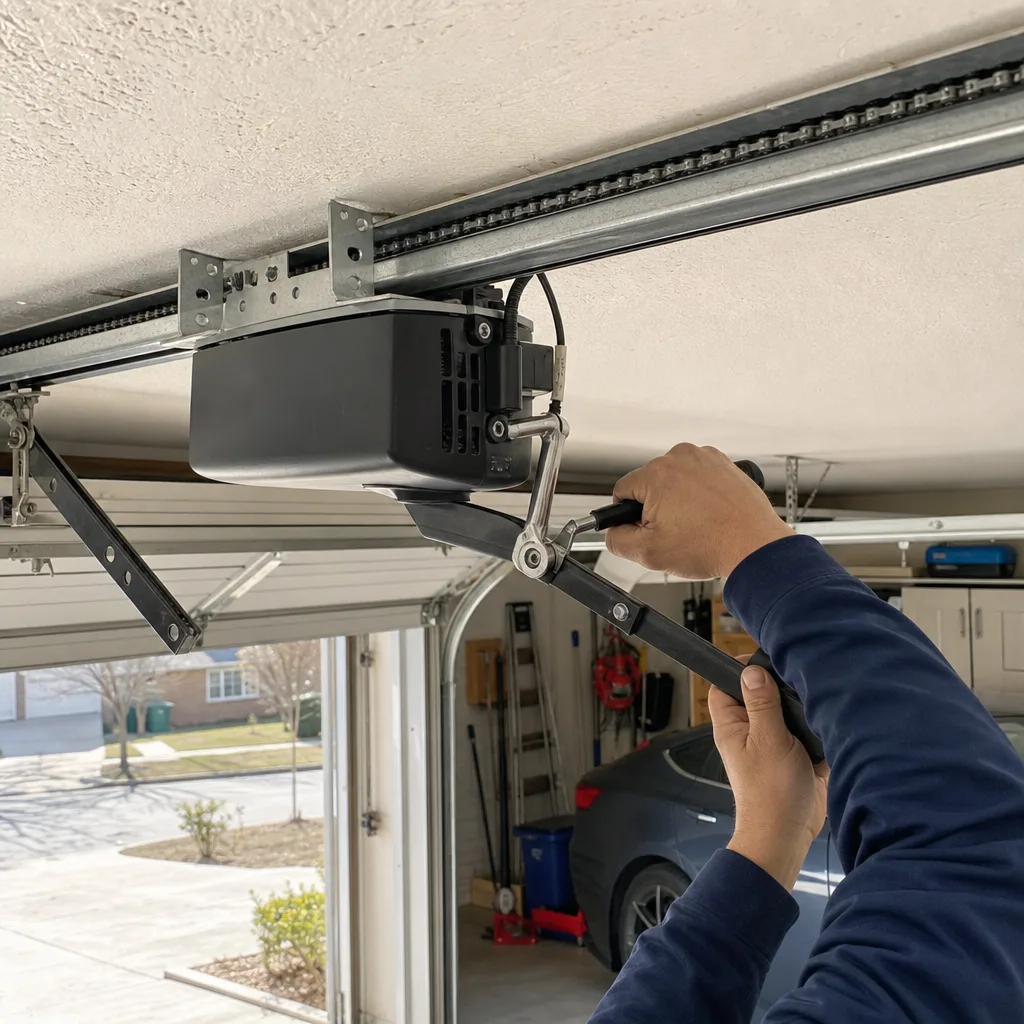
Here’s the honest table. In Plano, these are the price ranges we quote for each warning sign discussed above, and the recommended timeline for addressing it.
| Warning Sign | Component | Typical Plano Cost | Repair or Wait |
|---|---|---|---|
| Broken torsion spring | Torsion spring | $180-$340 | Same day. Do not operate door. |
| Frayed cable (3+ strands) | Lift cable | $150-$250 | Same week. Door may drop if untreated. |
| Grinding noise | Rollers | $120-$180 if replacement | Lubricate first. Schedule replacement within 30 days if noise persists. |
| Scraping noise | Track or panel | $80-$150 alignment | Schedule within 60 days. |
| Popping noise | Hinges | $60-$120 tightening or replacement | Tighten first. Schedule if stripped. |
| Slow reversal | Sensors, limit switch, or obstruction | $0-$150 | Diagnose yourself in 10 minutes. Call if unresolved. |
| Asymmetric travel | Spring or cable balance | $100-$250 adjustment or replacement | Schedule within 2 weeks. |
| Logic board failure | Opener logic board | $140-$220 | Schedule within 2 weeks. |
Every dollar figure above is quoted and agreed in writing before any work starts. That’s not a sales promise; it’s Clause 1 of The Haven Standard, and it’s been the rule on every job since we started in Plano in 2015.
Common Mistakes to Avoid
- Operating a door with a broken spring. Even once. A door with a broken spring puts full load on the remaining components, and on a single-spring system, the opener is now lifting the entire weight of the door without counterbalance. This destroys opener gears and risks panel damage.
- Ignoring cable fraying because “the door still works.” Cable failure is rarely gradual in the final stage. The last strand gives way without warning. If you see fraying, you’ve already received your warning; use it.
- Lubricating with WD-40. WD-40 is a solvent, not a garage door lubricant. It cleans the track and then dries, leaving metal unprotected. Use a silicone-based garage door lubricant on rollers, hinges, and springs only. Keep it off the track itself, which should remain dry.
- Replacing the opener when the spring has failed. If your door got heavy and your opener burned out, the spring is the root cause. Replacing the opener without addressing the spring means the new opener inherits the same overload. A technician who quotes an opener replacement without checking spring balance is skipping a step.
- Waiting for the annual “tune-up” to catch problems. Warning signs are best caught when you notice them, not when a schedule tells you to look. The asymmetry test is free and takes 30 seconds. The cable check takes a flashlight and two minutes. Quarterly self-inspection catches problems six months before a service visit would.
- Using the door as a primary entry point. Every cycle counts against your spring’s service life. If you come and go through the garage three or four times a day, you’re putting 1,000+ cycles a year on a component rated for 10,000. You’re cutting the spring’s life from seven years to under five. A keypad entry door or a side door saves cycles and money.
When to Call a Professional
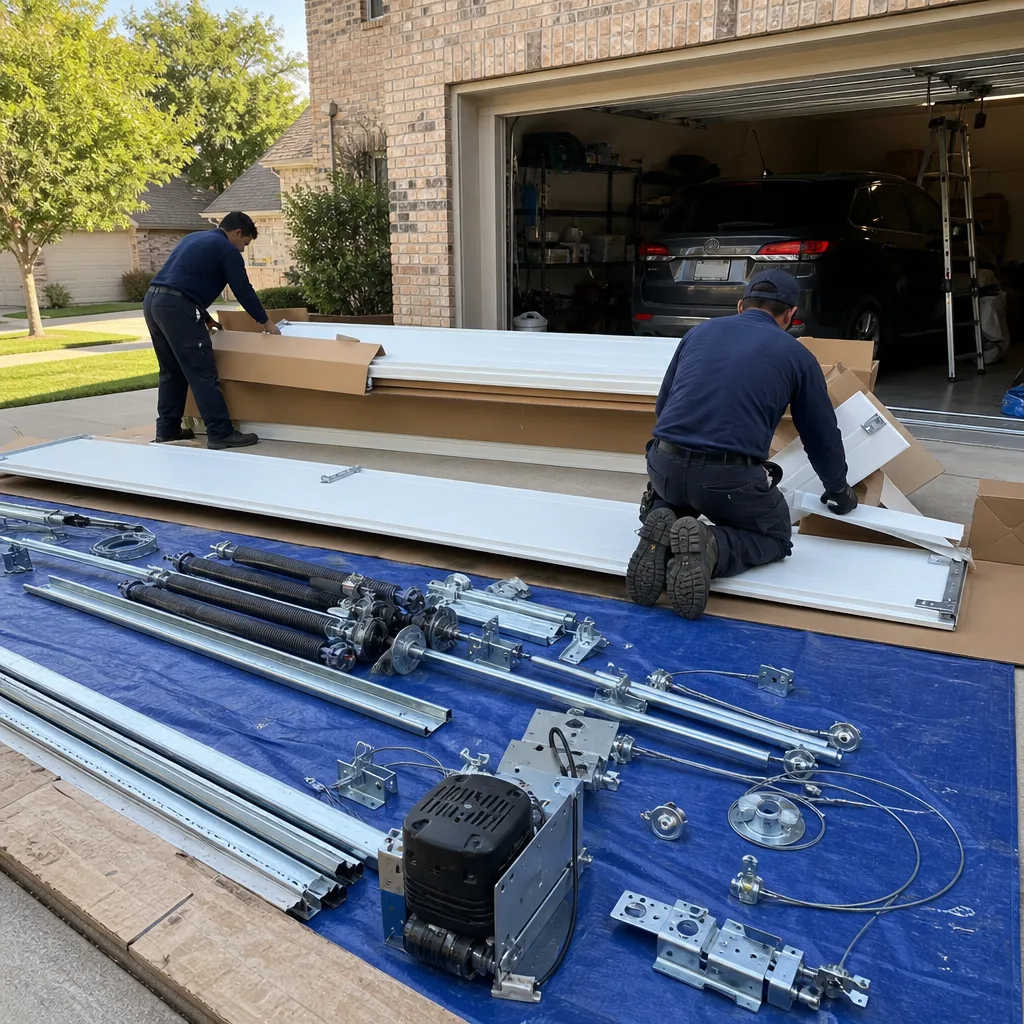
Call the same day if you have a visibly broken torsion spring or cable fraying at the drum. Call within two weeks if your asymmetry test shows uneven travel, your rollers are grinding after lubrication, or your door is reversing unpredictably with no sensor cause. Call within 30 days if you see hinge wear, loose track, or a limit switch that needs adjustment. Servo Garage Doors Plano offers free estimates across Plano. We’re at Servo Garage Doors Plano home online, and the phone number is (469) 455-3103. A live person answers, 24/7, including on holidays when the door breaks on Thanksgiving morning. No callbacks, no recordings.
Frequently Asked Questions
A visibly broken torsion spring and a frayed lift cable at the drum are the two signs that require same-day attention in Plano. A broken spring means the door should not be operated; a frayed cable with three or more broken strands means the door is at risk of dropping. Both are visible from the ground with a flashlight. Call (469) 455-3103 for same-day service in Plano, and we’ll quote a flat written price before any work begins.
Spring replacement in Plano typically runs $180 to $340 for a standard residential torsion spring, including parts and labor. The price varies by spring wire diameter and door weight. Every Servo job is quoted as a flat written price before work starts, per Clause 1 of The Haven Standard. Call (469) 455-3103 for a specific quote; estimates are free.
The three most common causes, in order, are photo-eye sensor misalignment, limit switch drift, and a track obstruction. Misalignment accounts for roughly 70% of what we see in Plano. Check the sensor lights first; if either is blinking, bend the bracket until both are solid. If the door still reverses, the limit switch may need adjustment. Call us if you’ve checked all three and the problem persists.
You can, but not indefinitely. Grinding usually means rollers have seized and are sliding instead of rolling. Lubricate the rollers and hinges with a silicone-based lubricant. If the sound persists after a week, schedule roller replacement within 30 days. Continued operation accelerates track wear, and a damaged track means a more expensive repair than rollers ever did.
Run the asymmetry test and cable check once per quarter, and always after severe weather. Plano’s heat and clay soil movement shift garage components more than most climates. Thirty seconds a quarter catches problems six months early. If you find something you can’t identify, our technicians document findings with photos on every visit, so you see exactly what we saw.
We service all major residential garage door opener and door brands, including LiftMaster, Chamberlain, Genie, Clopay, Amarr, Wayne Dalton, Craftsman, and Raynor. We’re independently owned and operated in Plano under The Haven Standard. Every repair from our Garage Door Repair in Plano page comes with a 365-Day Done Right Promise: if it’s not right, we make it right.
The Bottom Line
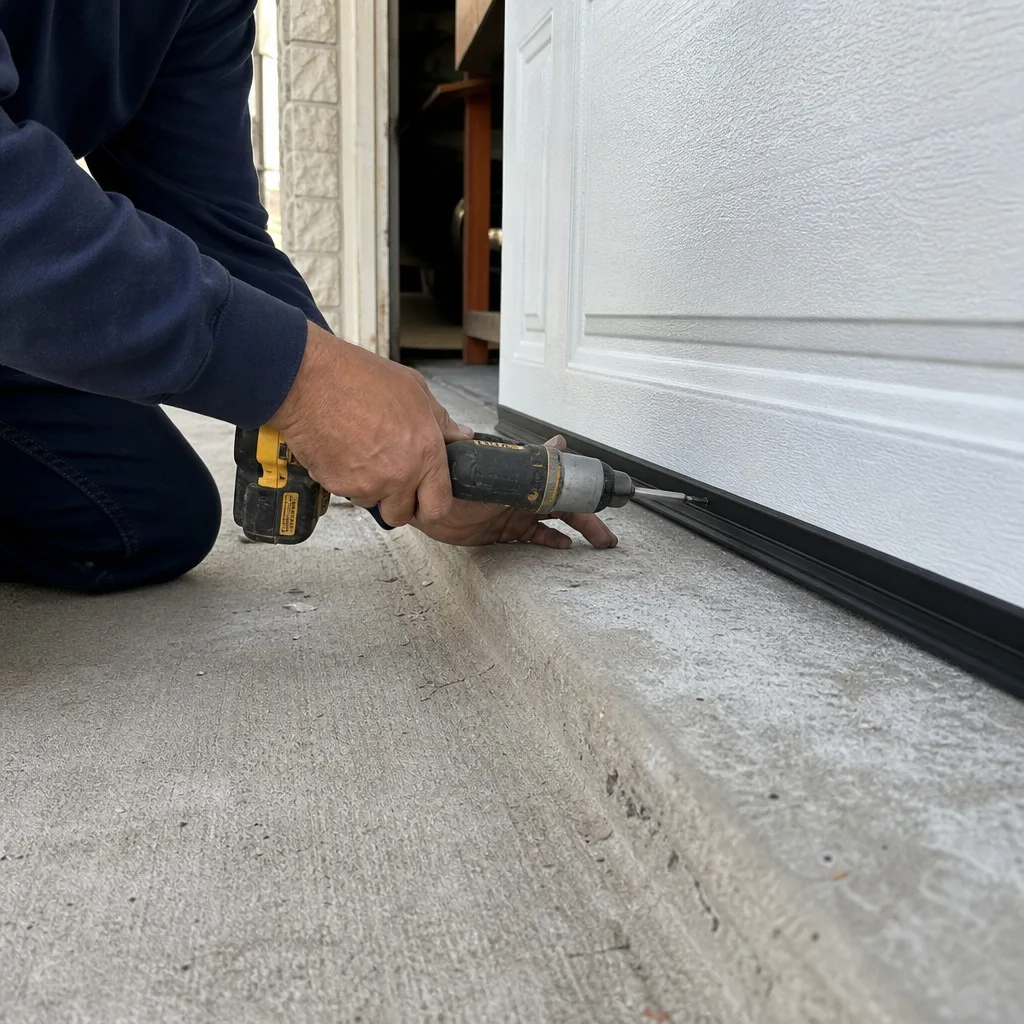
Garage door warning signs in Plano are manageable when matched to a component and a timeline. The two emergencies, broken springs and frayed cables, are visible from the ground and should never be ignored. Every other sign, from grinding rollers to slow reversal to asymmetric travel, points to a specific repair with a known price range and a reasonable schedule. The asymmetry test is the single best free diagnostic available to any Plano homeowner, and quarterly self-inspection is the cheapest insurance you’ll ever buy. If you see something you can’t identify, call (469) 455-3103. We’ll name the part, photograph the failure, and quote a written price before anything gets touched. That’s how we’ve operated since 2015, and it’s the only way we know to work.
Written by Marcus Deller, Owner at Servo Garage Doors Plano, serving Plano since 2015.