
Last updated September 20, 2026
Full 25-point door and opener safety check with every visit - springs, cables, rollers, tracks, and your LiftMaster or Chamberlain opener included
You get a price before we start. It does not change when the truck arrives.
 Before
 After
After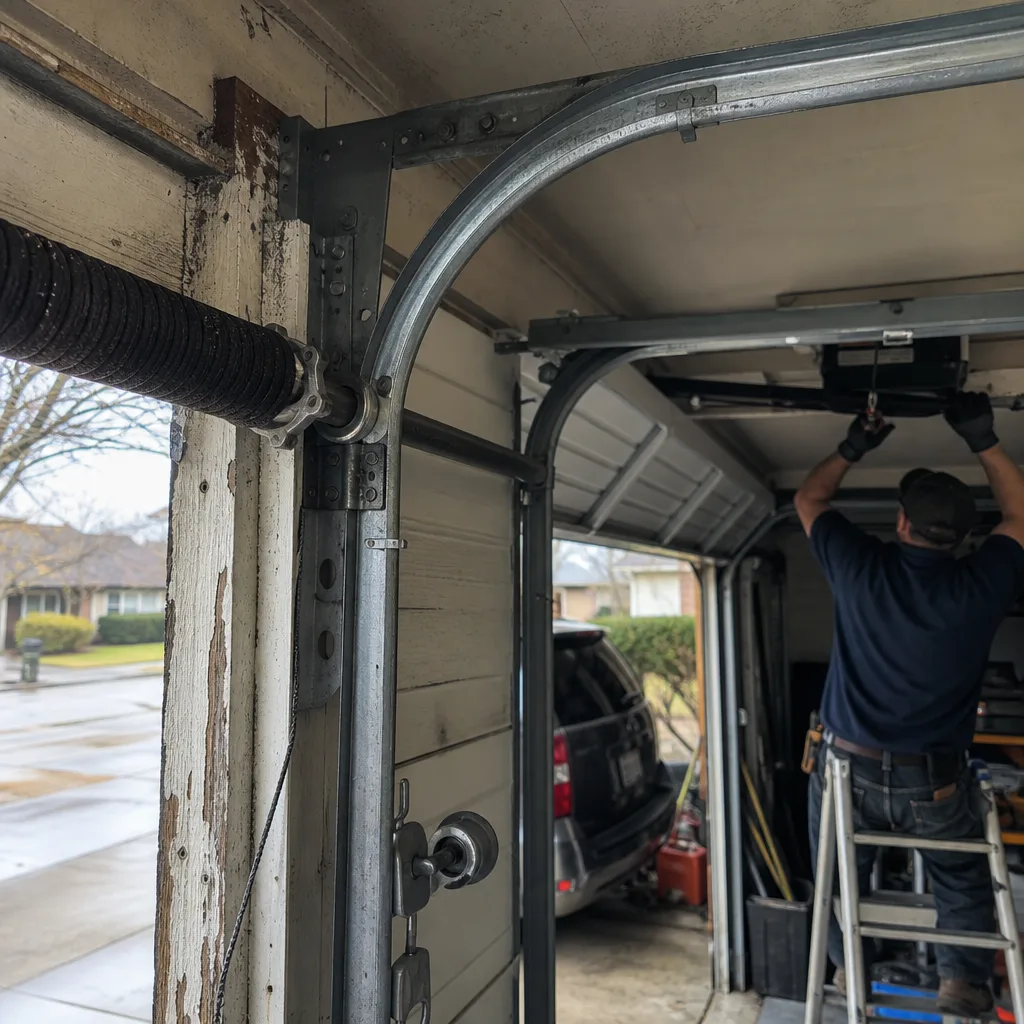 Before
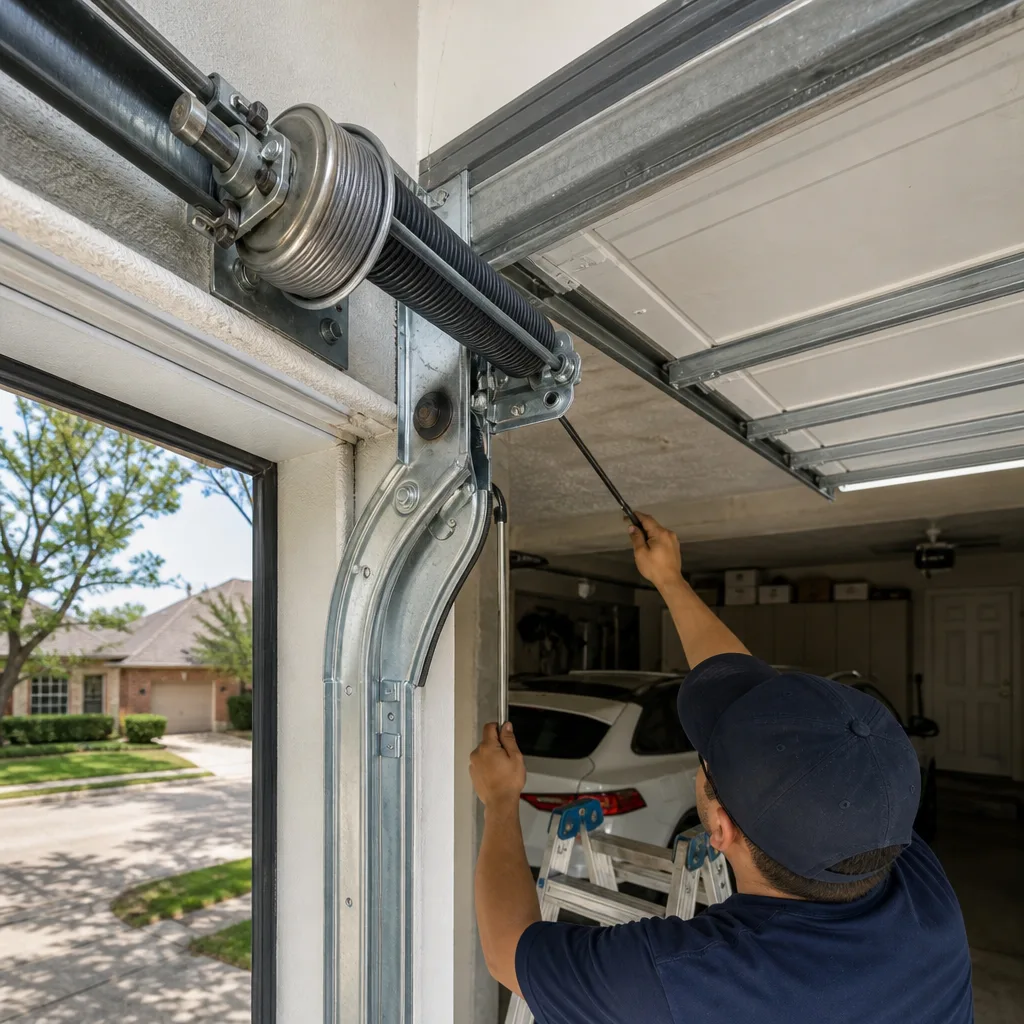 After
After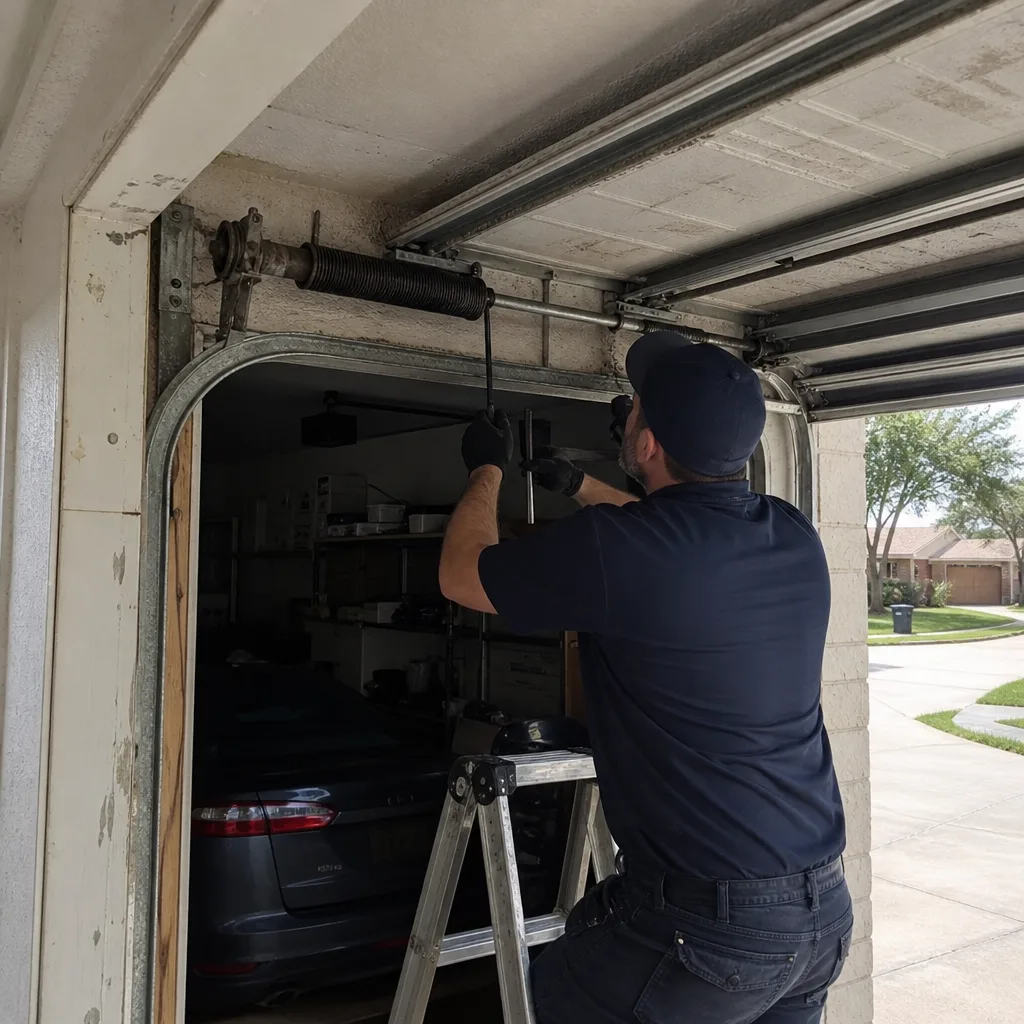 Before
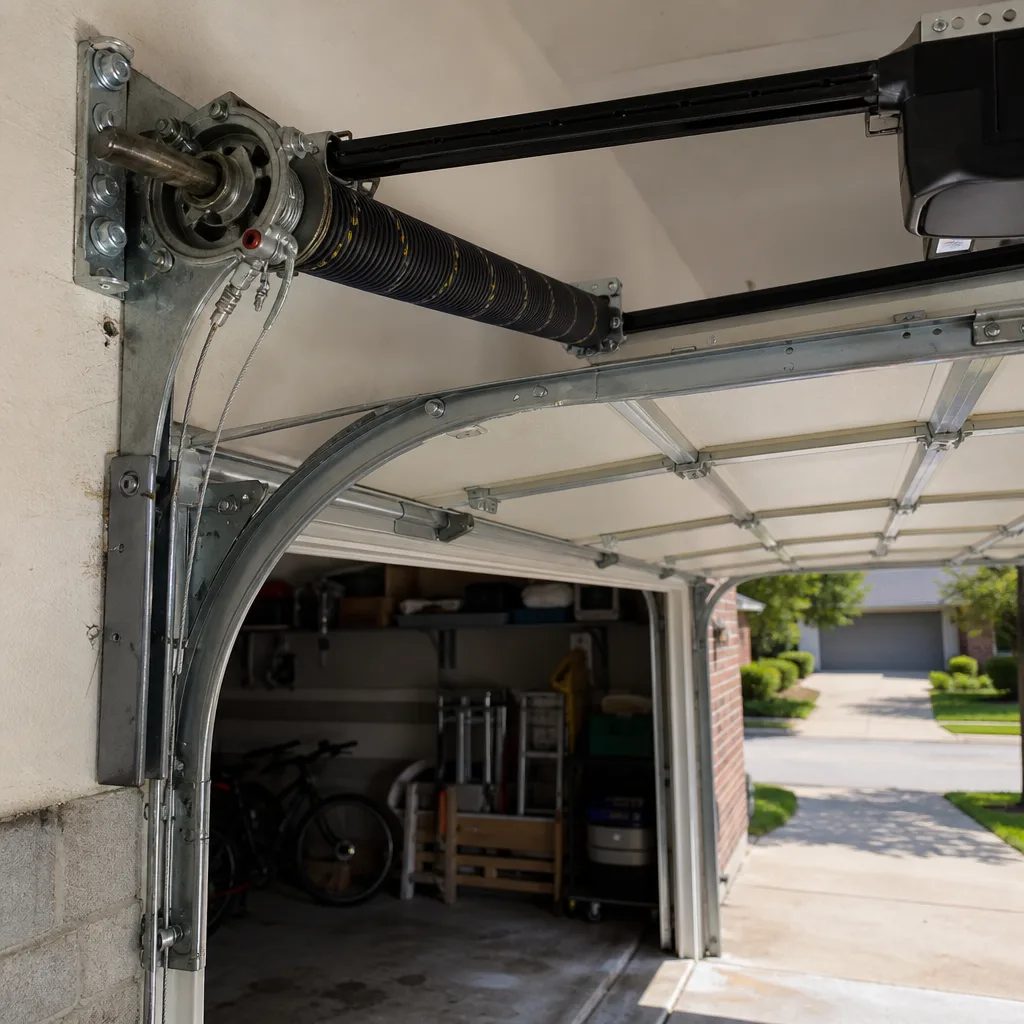 After
AfterSeasonal Garage Door Care for Plano: Year-Round Homeowner’s Guide
Plano recorded 53 days above 100°F in 2023. A standard torsion spring loses measurable tension at sustained temperatures above 95°F, which means Plano doors enter fall already slightly under-tensioned. A technician who sets spring tension in April and doesn’t recheck in October is working from the wrong baseline. This guide explains what actually happens to your garage door across Plano’s four stress events and what to do about each one before it becomes a repair call. For more guides & resources, see our blog.
Quick Answer
Seasonal garage door maintenance in Plano TX means checking spring tension in early October, lubricating with high-temperature lithium grease before summer, inspecting your bottom seal before the first hard freeze, and auditing weatherstripping after spring storm season. For a full overview, see The Complete Guide to Garage Door in Plano. A garage door in Plano needs about four focused maintenance sessions per year, each timed to a specific stress event rather than a calendar date. Budget $0 to $40 per session for DIY work and roughly $125 to $260 if a technician does the full seasonal service.
Table of Contents
- Why Plano’s Climate Is a Stress Pattern, Not a Four-Season Cycle
- Pre-Summer Checklist (May): Lubrication for Heat That Exceeds 90°F
- Heat Event Protocol (June-September): Thermal Expansion and Panel Warp
- October Spring Tension Recalibration: The Most Overlooked Maintenance Window in Plano
- Freeze Prep (November-February): Bottom Seals and the 7 to 12 Hard Freeze Nights
- Storm Season Weatherstripping Audit (March-April): Testing All Four Seal Points
- Common Mistakes to Avoid
- When to Call a Professional
- Frequently Asked Questions
- The Bottom Line
BeforeAfterWhy Plano’s Climate Is a Stress Pattern, Not a Four-Season Cycle
Most garage door maintenance guides assume a calendar: lubricate in spring, check seals in fall, inspect hardware in winter. That model works in Chicago or Minneapolis. It fails in Plano because our climate doesn’t distribute stress evenly across twelve months. We get one long heat event, one short but real freeze window, and two brief transition periods where the weather swings hard and fast. Each of these events stresses different components in different ways, and the maintenance that prevents failure has to map to those events, not to dates on a wall calendar.
The heat event runs from late May through September. Sustained temperatures above 95°F change how lubricants behave, how metal expands, and how torsion springs hold tension. The freeze window runs from late November through February, when Plano averages 7 to 12 hard freeze nights per year. That’s enough to crack an untreated vinyl bottom seal, but not enough that most homeowners think to check theirs. The transition periods, March through April and October, are when doors that survived the extreme season show their accumulated damage and when smart homeowners do the work that prevents the next failure.
We’ve been doing garage door repair in Plano since 2015. The calls we get in any given month are predictable because the stress pattern is predictable. July calls are thermal expansion issues. December calls are frozen seals and snapped cables. The maintenance schedule below follows that pattern so you’re working on the right problem at the right time.
Pre-Summer Checklist (May): Lubrication for Heat That Exceeds 90°F
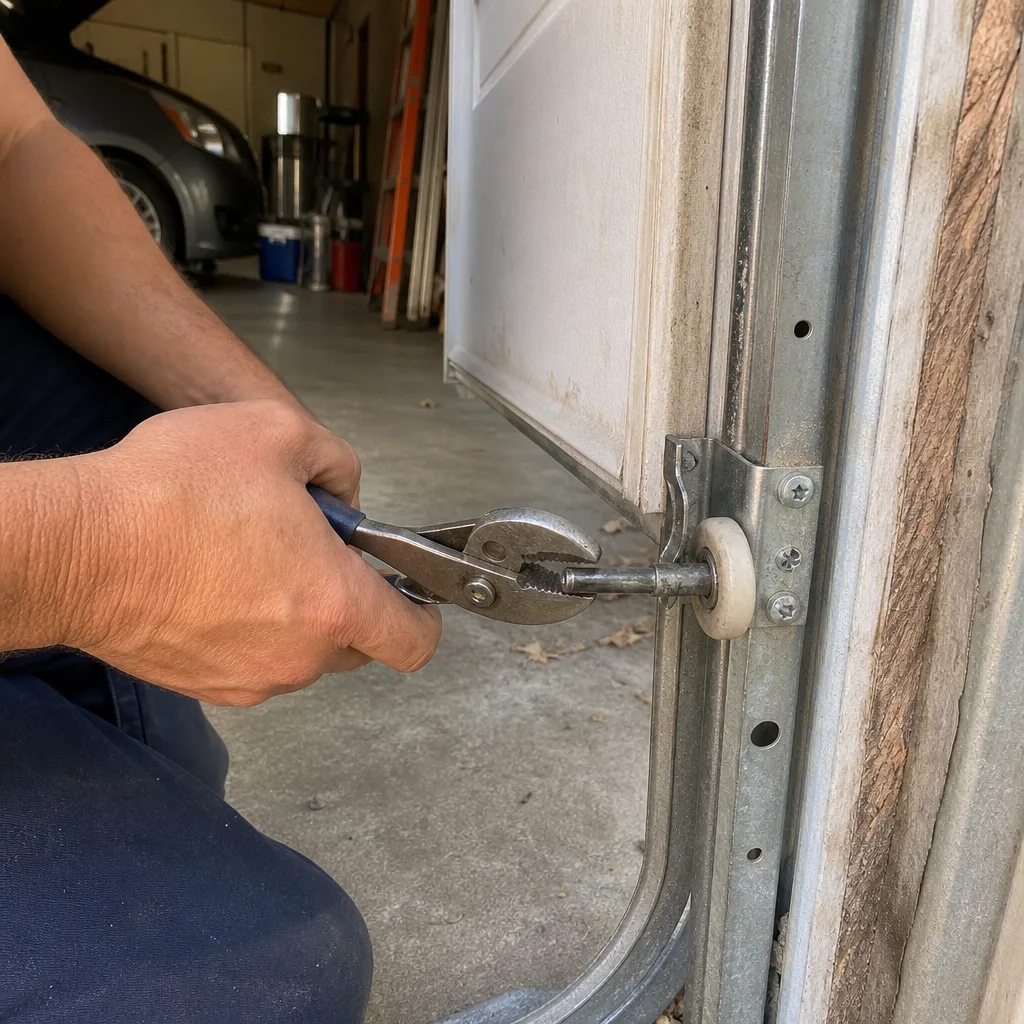
The most common lubrication mistake we see in Plano is using the wrong product. Standard WD-40 is a solvent and water displacer, not a lubricant. It burns off at sustained temperatures above 90°F, which means by mid-June in Plano, a door lubricated with WD-40 in May is running dry. When a dry door runs through 30 to 40 open-close cycles per day in summer heat, the rollers wear faster, the hinges grind, and the opener motor works harder against increased friction. That friction translates to strain on the logic board and the trolley carriage over a full Plano summer.
Here’s the pre-summer lubrication protocol we recommend for Plano homeowners:
- Use white lithium grease or a garage-door-specific silicone lubricant. White lithium grease holds viscosity at 120°F and won’t run off the hinge pins during a Plano July. Garage-door silicone sprays designed for high-temperature conditions also work, but avoid general-purpose household sprays.
- Lubricate the hinge pins, not the door surface. One drop of white lithium grease on each hinge pin, working from bottom to top, allows the pin to rotate freely within the hinge. The door surface itself needs no lubricant.
- Lubricate the roller stems and ball bearings. Nylon rollers with sealed bearings need nothing. Steel rollers with exposed bearings need a drop of lubricant on the stem where it enters the hinge. If the roller itself is rusted or wobbles, replace it before summer heat accelerates the failure.
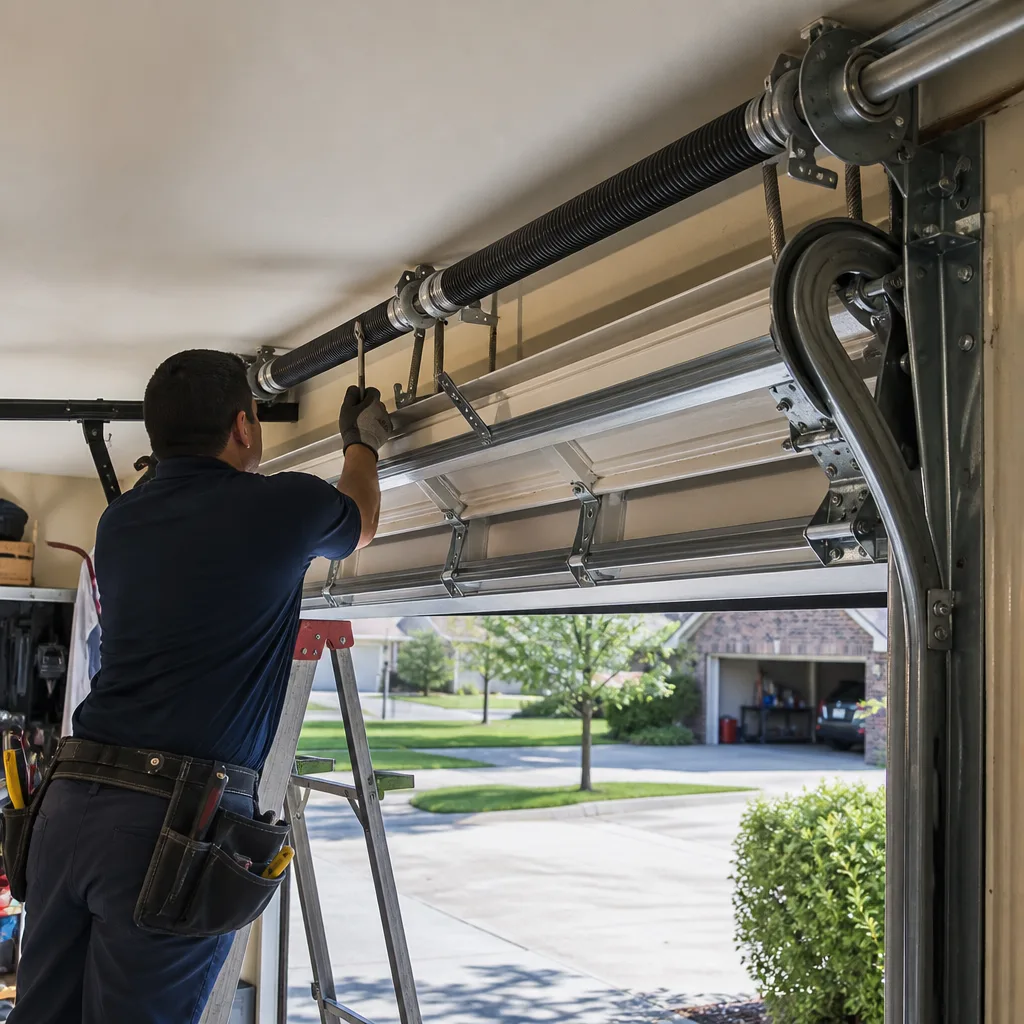
- Grease the torsion spring coils. A light coating of white lithium grease along the coil surface reduces friction between coils as the spring winds and unwinds. This is the component that loses tension to heat, so reducing coil friction is a small but real protection.
- Check the opener rail. Most modern opener rails from Chamberlain, Genie, and LiftMaster are pre-lubricated and need nothing. If the rail is dry or the trolley carriage chatters, use a small amount of white lithium grease on the rail. Do not use WD-40 on the opener rail.
This 20-minute lubrication pass costs about $15 in materials and directly reduces the strain that Plano’s summer heat puts on every moving component. If you’d rather have it done, most professional seasonal services in Plano charge between $125 and $180 for a full lubrication and inspection.
Heat Event Protocol (June-September): Thermal Expansion and Panel Warp
Steel expands when it heats. A 16-foot sectional steel garage door in Plano, sitting in direct sun on a 105°F afternoon, can expand enough that the panels press against each other at the seams. This is thermal expansion, and it’s the most common summer issue we see in Plano, especially on west-facing garage doors that catch afternoon sun. The symptom is a door that rubs or squeaks at specific panel joints on hot days, then runs fine at night or on cooler days.
Left unaddressed, sustained thermal expansion pressure can warp individual panels. A warped panel doesn’t sit flush against the weatherstrip, which lets heat and dust into the garage and eventually lets water in during spring storms. Here’s how to identify thermal expansion gaps before they become panel warps:
- Inspect the panel joints on a hot afternoon, not a cool morning. Look at the seams between panels where they meet. If the seam looks tight or the panels are visibly pressing against each other, the door is under thermal expansion stress.
- Run the door and listen. A rubbing or squeaking sound that comes only at the panel seams and only on hot days is thermal expansion, not a mechanical issue. The fix is often as simple as adjusting the panel hinges slightly to allow more clearance, but a technician should do this adjustment because over-loosening panel hinges is dangerous.
- Check the door’s straightness using the track as a reference. Stand at the back of the garage and sight down the door. A straight door is a clean line. A door under expansion stress can bow outward slightly, especially if the door faces direct afternoon sun.
- Check for paint blisters or panel surface changes. Paint blisters on a metal door mean the underlying steel is heating and cooling rapidly. This is cosmetic, but it signals that the panel is absorbing more heat than the paint can handle, which over time degrades the panel’s structural integrity.
Not all panel materials hold dimension equally in sustained heat. Through our work across Plano, we’ve found that steel panels from Amarr and Clopay with insulated cores tend to hold dimension better than single-layer steel doors, because the insulation layer acts as a thermal buffer. Wood doors are the most dimensionally stable in heat but require far more maintenance to prevent rot in Plano’s humid summer months. If you’re planning an upcoming garage door installation in Plano and your door faces west or southwest, an insulated steel door is often the best heat-performance choice for this climate.
October Spring Tension Recalibration: The Most Overlooked Maintenance Window in Plano
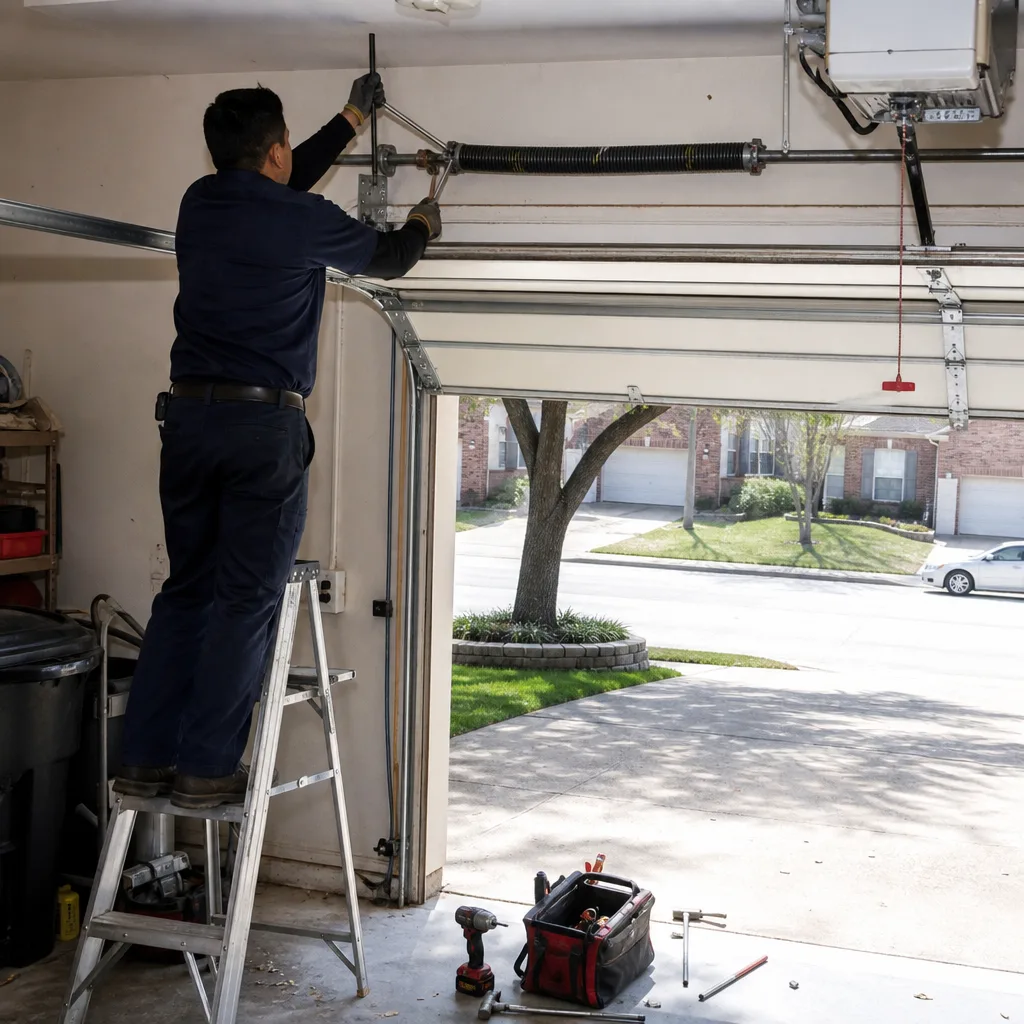
Most garage door guides tell you to check spring tension in spring, the season. That’s good advice for most of the country. It’s wrong for Plano. The reason goes back to the opening paragraph of this guide: a standard torsion spring loses measurable tension at sustained temperatures above 95°F. After a Plano summer with 40 to 50 days above 100°F, most torsion springs are slightly under-tensioned. If you check tension in April, you’re checking the spring before the event that causes the problem. The correct time to check spring tension in Plano is early October, after the heat event has ended and before the cold season puts additional load on the door.
Here’s the door-balance test we use to check spring tension. You’ll need about 10 minutes and no special tools:
- Close the door completely. Pull the emergency release cord on the opener to disengage the door from the trolley carriage. This lets you operate the door manually, which is the only accurate way to test balance.
- Lift the door to waist height, roughly 3 feet off the ground. Let go of the door. A properly tensioned door should stay in place, neither rising nor falling more than an inch or two.
- Lift the door to full open and release. The door should hold at the top. If it creeps down, the spring is under-tensioned and doing less work than the cables and your opener are doing.
- Lower the door slowly and watch for any jerky or uneven movement. A door that lowers smoothly and consistently is fine. A door that drops quickly, bounces, or hangs unevenly has a spring tension problem or a cable problem.
If your door fails this test in October, that’s a signal to have the spring tension recalibrated. We’ve seen Plano doors pass this test in April and fail it in October after one hot summer. A spring tension recalibration in Plano typically costs between $85 and $140 per spring, which is significantly less than a spring replacement, which runs $180 to $340 for a standard torsion spring including labor and parts. See our Garage Door Cost Breakdown: The Plano Homeowner’s Reference for 2026 for detailed pricing. If the spring has visible gaps in the coils, rust, or is more than 7 years old, replacement is usually the better call. But recalibration is the right maintenance step after a hot Plano summer when the spring is otherwise in good condition.
One caution, stated plainly because this is the single most dangerous component on your garage door: never adjust a torsion spring yourself. Torsion springs are wound under several hundred pounds of torque. If the winding bar slips, the spring unwinds instantly and can cause serious injury. The door-balance test above is safe. Adjusting spring tension is not. Call a trained technician for that work.
Freeze Prep (November-February): Bottom Seals and the 7 to 12 Hard Freeze Nights
Plano averages 7 to 12 hard freeze nights per year. That’s exactly enough to crack an untreated vinyl bottom seal, but not enough that most homeowners think to check theirs before winter. What happens is this: the vinyl or rubber bottom seal absorbs moisture during the mild, damp days that precede a freeze. When the temperature drops below freezing, that moisture expands as ice, and over repeated freeze-thaw cycles, the seal develops small cracks. Those cracks get bigger every winter until the seal eventually splits. Once the seal is split, cold air flows into the garage, your utility bill climbs, and insects and rodents find an easy entry point.
Here’s the freeze prep routine we recommend for Plano homeowners in November:
- Inspect the bottom seal for cracks, splits, or brittleness. Look at the seal where it meets the concrete floor. Flex it gently with your fingers. If it cracks or feels stiff and brittle, replace it before the first freeze. A replacement bottom seal for most standard doors costs $20 to $40 at retail and takes about 30 minutes to install yourself.
- Check the seal’s contact with the concrete. Close the door and look from inside the garage. Light should not be visible under the door. If you can see daylight, the seal isn’t making full contact, which means the door may need a minor height adjustment or the seal needs replacement.
- Lubricate the weatherstripping with a silicone-based protectant. This prevents the rubber from drying out and cracking during the freeze-thaw cycle. Do not use petroleum-based products like WD-40, which actually accelerates rubber breakdown.
- Test the door’s cold-weather operation on a mild day. Open and close the door fully three times, watching for any hesitation or sticking. Cold weather makes metal parts contract, and a door that works perfectly in September may bind slightly when the temperature drops.
The bottom seal is the most important winter maintenance item in Plano. It’s cheap, it’s easy to check, and it fails predictably after just a few hard freezes. If your garage is attached to your house, a failed bottom seal also lets cold air infiltrate through the shared wall into your living space, which means this $20 part affects your heating bill all winter.
One more note about freeze season: frozen garage doors are much less common in Plano than in Minneapolis, but they do happen. If your door is frozen to the floor during a hard freeze, do not force it open with the opener. The opener motor will strain against the frozen seal, and you can strip the plastic gears inside the opener or snap the cable on a frozen section. Turn the opener off, wait for the temperature to rise above freezing, and then gently break the ice seal with warm water before opening the door.
Storm Season Weatherstripping Audit (March-April): Testing All Four Seal Points
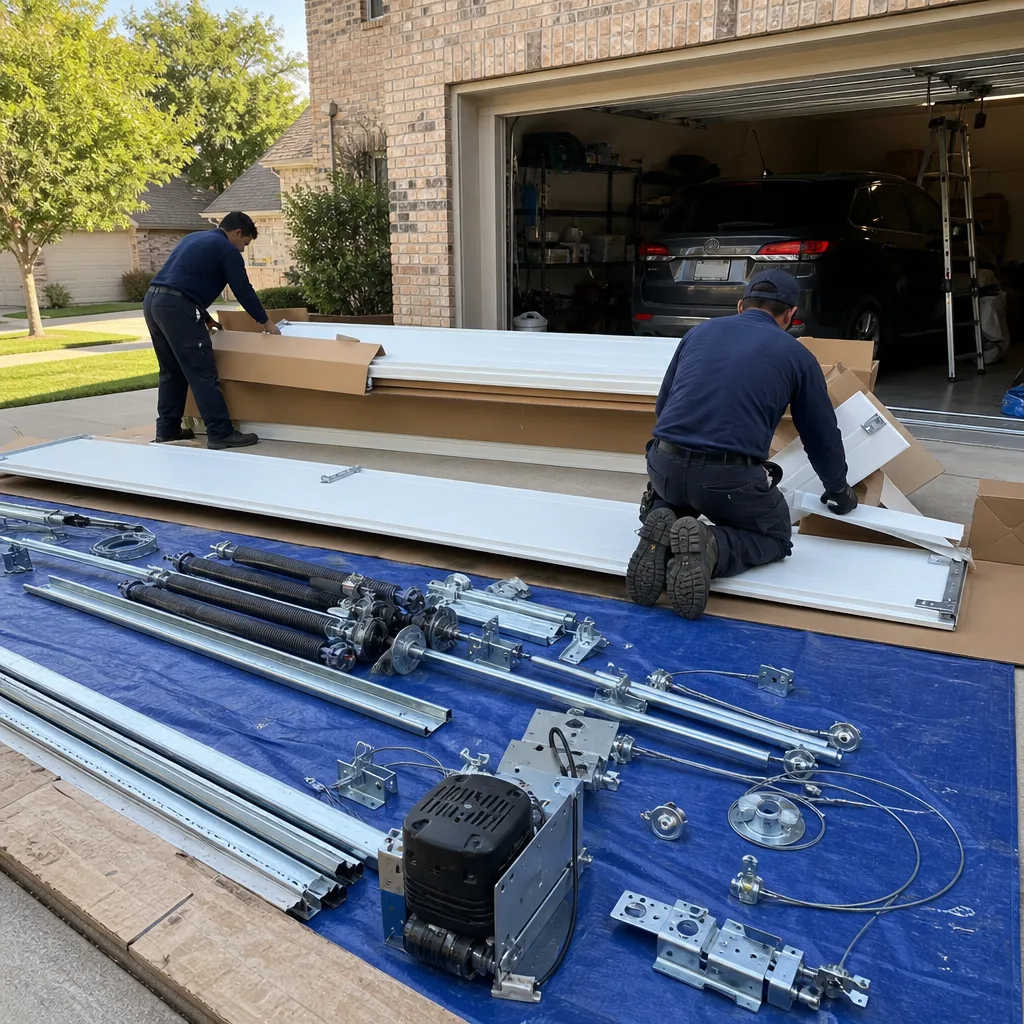
Spring in Plano brings storms, and storms bring wind-driven rain. A garage door has four seal points, and any one of them can let water into the garage if it’s not making full contact. The most reliable way to test for gaps is with a flashlight, not your fingers.
A standard sectional garage door seals at these four points:
- The bottom seal. This is the vinyl or rubber strip that runs along the bottom of the door and compresses against the concrete floor when the door is closed.
- The top seal. This is the weatherstripping along the top of the door opening, mounted to the header, that the top panel presses against when the door is fully closed.
- The side jambs. These are the vertical weatherstripping strips mounted along the left and right sides of the door opening. The door panels press against these strips when the door is closed.
- The between-panel seams. Some sectional doors have integrated seals between panels, especially insulated models from Amarr and Clopay. These prevent water from entering between individual panel joints.
Here’s the flashlight test for each seal point:
- Close the garage door completely. Turn off the garage lights so the garage is as dark as possible.
- Stand inside the garage and hold a bright flashlight against each seal point. Start at the bottom seal and work your way up the left jamb, across the top seal, down the right jamb, and then check the between-panel seams.
- Watch for light leaking through. If you can see flashlight beam penetrating through the seal, that seal has a gap. Where light gets through, wind-driven rain can get through, too.
- Check for loose or pulling-away weatherstripping. Even if no light leaks through, run your hand along the stripping. If it’s loose, cracked, or pulling away from the mounting surface, replace it before storm season peaks.
This audit takes 5 minutes and catches 90% of the water intrusion issues Plano homeowners deal with during April and May storms. If you find a gap, replacement weatherstripping for a standard 16-foot door runs $30 to $60 per seal, and most homeowners can install it themselves in under an hour per seal. If the door itself is out of alignment, though, adjusting the tracks or the door requires a professional.
Common Mistakes to Avoid
- Lubricating with WD-40 before summer. WD-40 is a solvent, not a high-temperature lubricant. It burns off above 90°F, which in Plano means it’s gone by mid-June and your door runs dry through the hottest months of the year.
- Checking spring tension in April. The tension loss happens during the heat event, not before it. April checks are measuring a spring that hasn’t experienced the stress yet. October checks catch the tension loss while it can still be recalibrated inexpensively.
- Ignoring a squeaking panel seam on hot afternoons. That squeak is thermal expansion pressure building between steel panels. Wait long enough and the pressure warps a panel, which then needs replacement rather than a simple hinge adjustment.
- Never checking the bottom seal because Plano winters are “mild.” You don’t need a Minnesota winter to crack a vinyl seal. Plano’s 7 to 12 freeze nights are enough to cause repeat freeze-thaw cracking that fails the seal within 3 to 5 seasons.
- Forcing open a frozen garage door with the opener. The strain on a frozen seal can strip the plastic gears inside your opener’s drive unit or snap a cable. This turns a $20 seal problem into a $150 to $400 opener repair or a cable replacement.
- Skipping the weatherstripping audit because the door “looks fine.” A seal with a gap is invisible from the outside. The flashlight test from inside is the only reliable way to catch a pre-storm gap before it becomes a water damage claim.
- Adjusting spring tension yourself. Torsion springs hold hundreds of pounds of torque. Never attempt any spring adjustment. The balance test described above is safe; the adjustment is not.
When to Call a Professional
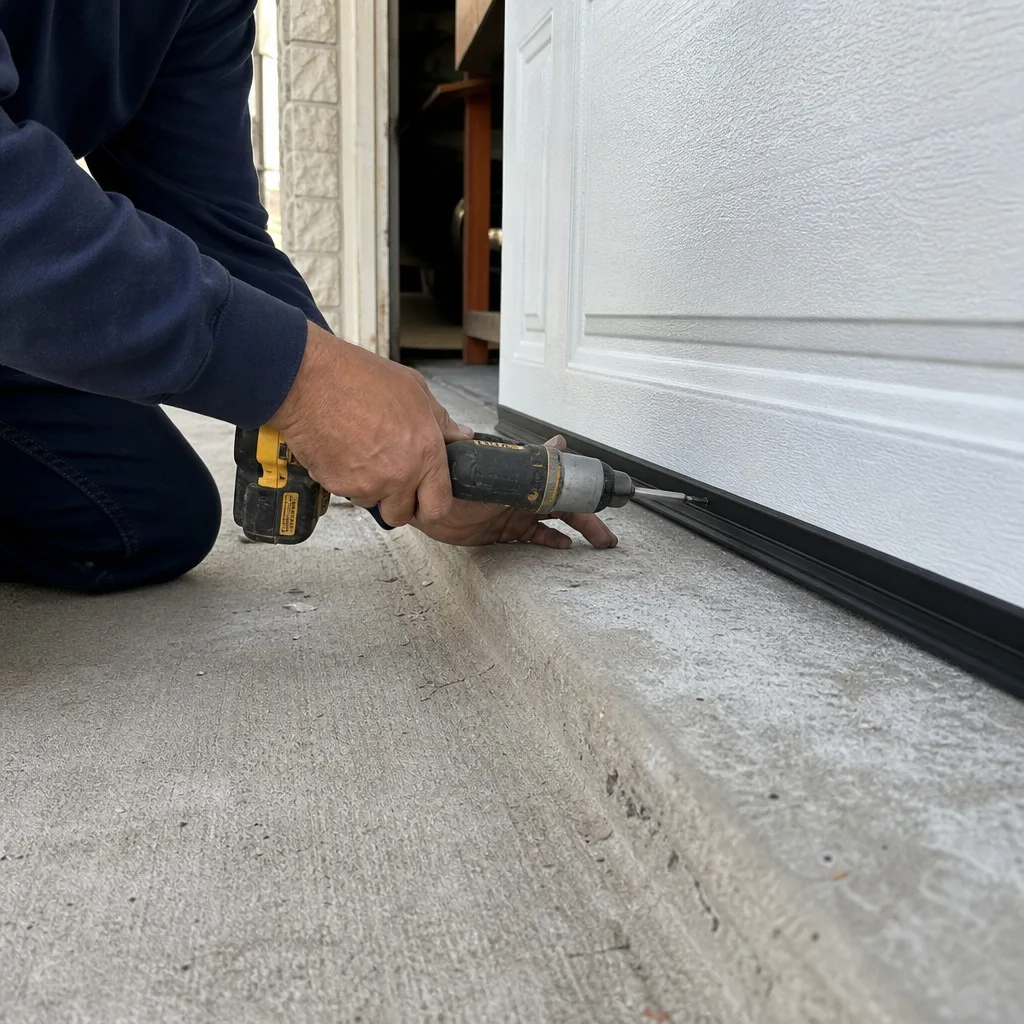
If your door fails the October balance test, call a technician. If a panel is visibly warped or bowed from summer heat, call a technician. If the door makes grinding or popping sounds during operation, call a technician. If the bottom seal is cracked, you can replace it yourself, but if the door doesn’t close evenly or has gaps on both sides of the jamb, the door itself may need realignment, and that’s professional work. If your spring is over 7 years old or shows visible coil gaps or rust, call for replacement before it snaps unexpectedly. Servo Garage Doors Plano offers free estimates in Plano - call (469) 455-3103 and we’ll inspect the door, quote a flat written price before any work starts, and provide a documented photo record of what we found and what we did, per Clause 4 of The Haven Standard.
Frequently Asked Questions
DIY seasonal maintenance costs $15 to $60 per year in materials: white lithium grease, silicone protectant, and occasional replacement weatherstripping or a bottom seal. Not sure whether to DIY or hire out? Read DIY vs Professional Garage Door: The Plano Homeowner’s Decision Guide. Professional seasonal service in Plano typically runs between $125 and $260 depending on what’s included. A spring tension recalibration is $85 to $140 per spring, and a bottom seal replacement is $65 to $125 installed by a professional. We quote a flat written price before any work begins, so you’ll know the exact number before we touch anything. Call (469) 455-3103 for an exact quote on your door.
For most seasonal maintenance items including lubrication, seal checks, and balance testing, yes, we can often schedule same-day or next-day service in Plano. If the maintenance reveals a larger issue like a spring replacement or panel replacement, we’ll quote the written price on the spot and can usually complete the repair during the same visit if the parts are on the truck. Call (469) 455-3103 to schedule a maintenance visit.
No. Under The Haven Standard Clause 1, we provide a written price and written scope before any work starts, and the price we quote is the price you pay. If we find something unexpected during the inspection, we photograph it, explain it, and quote a separate written price for any additional work before we proceed. You approve everything in writing before we touch anything. That’s how we’ve operated since 2015.
Yes. Our technicians carry common replacement parts including bottom seals in multiple sizes, weatherstripping, rollers, hinges, and springs for all major brands including Chamberlain, Genie, Clopay, Amarr, and more. If your seasonal inspection reveals a worn part, we can usually replace it during the same visit rather than scheduling a second appointment.
We recommend once every other year for professional service, with the homeowner doing the four seasonal checks described in this guide in between. The exception is if your door is more than 10 years old, faces west or southwest, or operates more than 20 cycles per day. Those doors benefit from annual professional inspection because they accumulate stress faster than typical residential doors.
Yes. Heat affects openers indirectly. When a door runs dry or under thermal expansion stress, the opener motor works harder to move it. That increased strain produces heat inside the opener’s motor and logic board, and sustained overheating shortens the opener’s lifespan. Keeping the door lubricated and checking for thermal expansion panel binding in June through August directly protects your opener, whether it’s a Chamberlain, Genie, LiftMaster, or another brand. If your opener is running hot or reversing unexpectedly, call (469) 455-3103.
The Bottom Line
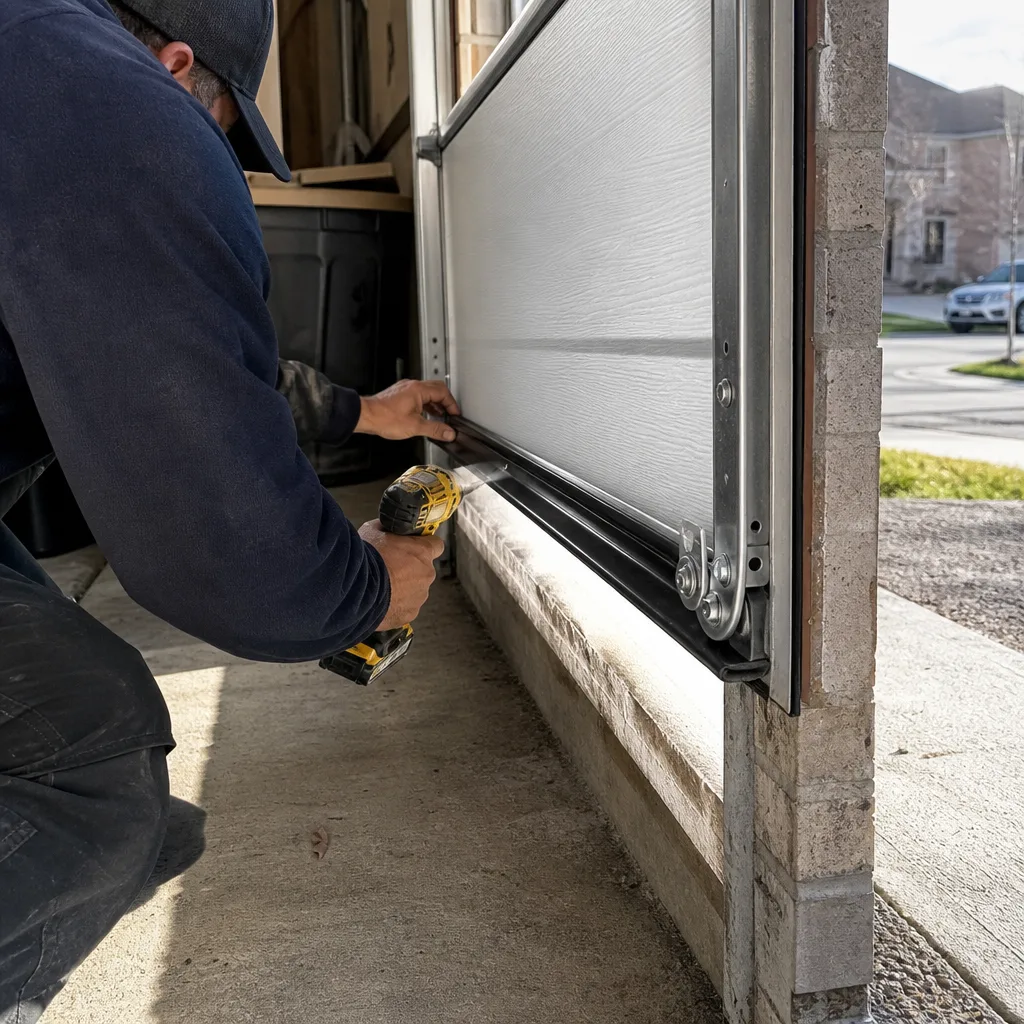
Plano garage doors don’t need four-season maintenance. They need stress-event maintenance: lubrication and thermal expansion checks before the heat arrives, spring tension recalibration after it leaves, bottom seal inspection before the first freeze, and a weatherstripping audit after storm season. The tools are simple: white lithium grease, a flashlight, and 10 minutes for a balance test. The savings are real: a $20 bottom seal replaced in November prevents a $300 water damage repair in April. A $120 spring recalibration in October prevents a $300 spring replacement in January. Do these four maintenance sessions each year, call (469) 455-3103 when something fails a test, and your garage door will handle Plano’s stress pattern without becoming one of our emergency repair calls.
Written by Marcus Deller, Owner at Servo Garage Doors Plano, serving Plano since 2015.